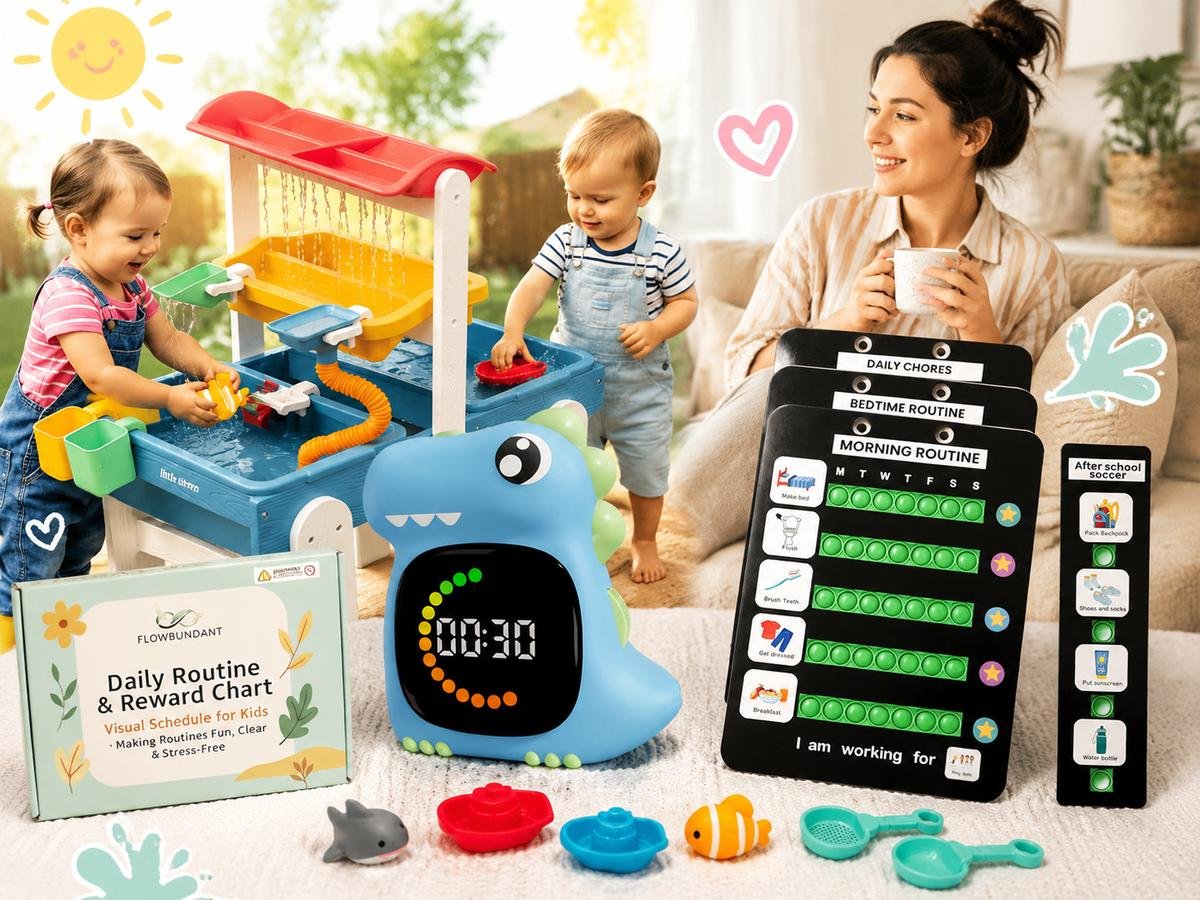
The Summer Routine for Toddlers That Actually Works
I still remember the exact morning it fell apart. My twins had just finished their last day of preschool, and I thought, great, a whole summer together! Day one was magical. Day two, a little wobbly. Day three, my daughter was full-on sobbing at 8:47am because I told her we were going outside and she needed to know if that was before or after snack, what came after outside, why it wasn’t on a chart, and could we please do the chart thing.
Here’s what I learned that summer: toddlers don’t need freedom. They need structure they can see. The moment preschool’s routine disappears, your toddler’s nervous system goes haywire. They can’t self-regulate without knowing what comes next, and suddenly every single transition becomes a potential meltdown. I spent two summers white-knuckling it before I figured out the actual fix. It wasn’t a new discipline strategy or a behavior chart. It was six products that work together to give summer a predictable shape your toddler can count on.
Here’s how these six pieces turn the summer free-fall into a routine your toddler will actually follow.
This post contains affiliate links. As an Amazon Associate I earn from qualifying purchases, at no extra cost to you!
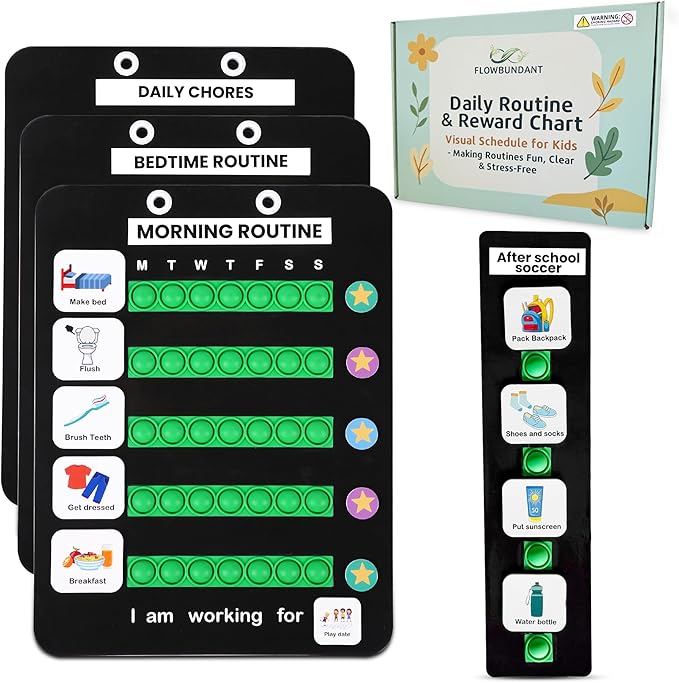
The Routine Board Hero: When Your Toddler Needs to See What Comes Next
Why we love it: The most powerful single thing you can add to your summer is a visual routine chart your toddler can check themselves. When my daughter could see that outside time came after breakfast, and snack came after outside, the “what are we doing now?” questions stopped. Not slowed. Stopped. Toddlers aren’t being difficult when they ask a hundred times. They genuinely can’t hold a sequence in their heads. Give them something to look at, and half your morning negotiations disappear before breakfast is even over.
Magnetic picture-card routine boards are the gold standard for this. Each card flips to a “done” side so your toddler gets the satisfaction of completing steps themselves. Thousands of mamas are leaving five-star reviews saying their toddler started moving through the morning routine independently within a week. I get why. The visual cue replaces every verbal reminder you’ve been giving. You stop managing the sequence. The board does it.
- The win: Your toddler checks the board and starts the next activity without prompting.
- The time-save: You stop answering “what are we doing next?” fifteen times before 10am.
-
The habit-builder: The routine becomes automatic by Week 2 because your toddler trusts the board over everything else.
-
Real talk: Some boards ship with generic activity cards that don’t match your specific routine. Budget 20 minutes to customize the card set if the presets don’t line up with how your days actually go.
With the routine visible and your toddler checking the board, outdoor time is the block that needs the most structure. Knowing “outside” is next means nothing unless there’s something specific waiting for them out there.
The Outdoor Play Game-Changer: Water Play That Runs Itself
Why it makes mornings easier: Unstructured outdoor time is chaos waiting to happen. “We’re going outside!” tells a toddler absolutely nothing about what they’re supposed to do once they’re out there. A water table changes that completely. When the routine chart says “water table time,” your toddler knows exactly where they’re going and what they’re doing. They run to the backyard. You’re not managing the activity; the activity manages itself.
Water play also does something genuinely useful for big summer energy. Thirty minutes of sensory water play before lunch, and your toddler is calm, focused, and actually happy. After a lot of research on which tables hold up to real toddler use all summer, the best ones have legs that adjust as kids grow, a drain plug for easy cleanup, and accessories that make the play open-ended enough to stay interesting in late July. My twins would spend 45 minutes at the water table without a single argument on those early summer mornings. I wish I had started this sooner.
- The payoff: Outdoor time has a destination. Your toddler arrives, engages, and stays without you running the activity.
- The relief: Sensory water play burns energy and calms them down so behavior after the outdoor block is noticeably better.
-
The flow-maker: Water table time becomes the natural anchor between breakfast and lunch, and the routine clicks into place around it.
-
Fair warning: You will get splashed if you go in close. Completely worth it.

Outdoor time is anchored. But here’s the real problem: ending it. Getting a toddler out of a water table when time is up is where a lot of summer routines quietly fall apart.
The Meltdown Preventer: Warning Kids Before Every Transition
The Sync Factor: Transition protests are the single biggest thing that derails a toddler’s summer routine. “Five more minutes” becomes twenty, which becomes a meltdown because now it’s past snack time and everyone is melted and the rest of the day never recovers. A visual countdown timer solves this without you becoming the enforcer. The timer is the messenger. You set it five minutes before any transition, and when it goes off, time ended the fun. Not you.
Visual timers work because toddlers can actually see time disappearing. An abstract “five minutes” means nothing to a two-year-old. Watching a red wedge shrink to zero? That makes complete sense to a toddler brain. I’ve tried cheap kitchen timers and they don’t have the same effect. The Time Timer style, with the visible red disc that physically shrinks, is specifically designed around how young children perceive time. The difference in transition behavior is real and it happens fast.
- The relief: You stop being the enforcer of every routine transition, every single day.
- The game-changer for transition moments: Toddlers accept transitions with a visual warning in a way they simply won’t accept verbal warnings alone.
-
The win: Your toddler starts anticipating transitions instead of being blindsided by them, which means they’re calm going into the next routine block.
-
One thing to know: Set the timer in front of your toddler, not secretly in the background. The whole point is they watch it count down so there’s no surprise when it goes off.

With transitions handled, the last thing standing between you and a smooth outdoor block is the sunscreen step. And if you’ve ever wrestled a wriggling toddler into sunscreen, you know this is where summer routines go to die.
The Sunscreen Speed-Saver: Out the Door in 60 Seconds
The Morning Flow Maker: Sunscreen is the bottleneck nobody talks about. You want to be outside by 9am before it gets hot. But sunscreen takes five minutes of negotiating, the toddler runs, you chase, it’s a whole ordeal, and by the time you’re done it’s 9:30 and everyone is annoyed before outdoor time even starts. A continuous spray SPF changes the math completely. Thirty seconds of spray, a quick rub-in on the face, and you’re out the door. No rubbing. No drama. No chasing.
After going down a rabbit hole of reviews and parenting forums, here’s what I kept seeing: parents specifically calling out that their toddler tolerated the spray when they point-blank refused lotion. The continuous spray format means even coverage without a wrestling match. SPF 50 water-resistant formula means one application covers the entire outdoor block so you’re not stopping mid-water table to reapply.
- The time-save: Sunscreen goes from a 5-minute negotiation to a 60-second step in the routine.
- The payoff: You’re outside before 9am while it’s still cool, calm, and manageable.
-
The flow-maker: Sunscreen stops being the reason outdoor time gets pushed later and later until it’s too hot to bother.
-
Skip this if: Your toddler has sensitive skin or specific sunscreen allergies. Check the formula first and do a small patch test before making it part of the daily routine.

Outdoor time is covered, literally. Now the real test of any summer routine is the midday block. That’s rest time or quiet time, and if you don’t have something structured in place for it, your entire afternoon falls apart.
The Sanity-Saver: Quiet Time They’ll Actually Do on Their Own
Why This Earns Its Spot: If your toddler has dropped their nap but still needs a midday reset, you know the pain of “quiet time” that lasts six minutes before they’re at the door asking if it’s over. A dedicated quiet time activity kit changes the whole dynamic. When quiet time has its own special container with items that only come out during that block, it becomes something toddlers look forward to instead of fight against.
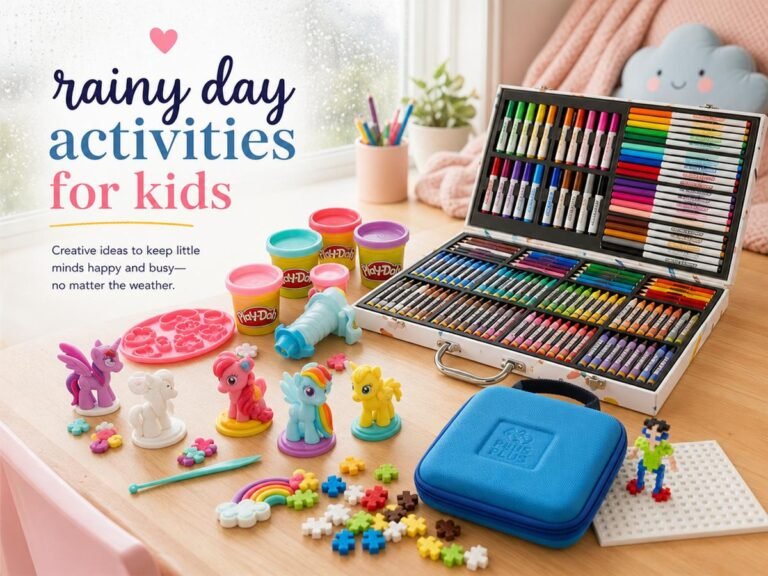
The system that works is simple: rotate what’s inside the quiet time box so it always feels a little exciting. Thousands of mamas swear by this approach, and I completely understand why. The novelty of “what’s in the box today?” gets toddlers to quiet time independently because they actually want to see what’s in there. Activities that work best are simple, open-ended, and low-mess: small puzzles, water drawing mats, sticker books, play dough. The box is the routine cue. They see it, they know what to do.
- The relief: You actually get 30 minutes of quiet in the middle of the day, every day, reliably.
- The habit-builder: Quiet time becomes a predictable routine anchor that toddlers expect and accept instead of resist.
-
The payoff: Older toddlers who dropped their nap still get a physical and mental reset, which means a genuinely better afternoon for everyone in the house.
-
The honest trade-off: You’ll need to rotate the activity items regularly to keep it interesting. If the same items are in the box every day, the novelty disappears and so does the cooperation.

Quiet time protected means the afternoon routine can actually hold its shape. The last piece is keeping hydration on track through all that outdoor time without constant interruptions pulling you both out of the flow.
The Hydration Flow Maker: No More Spill Interruptions
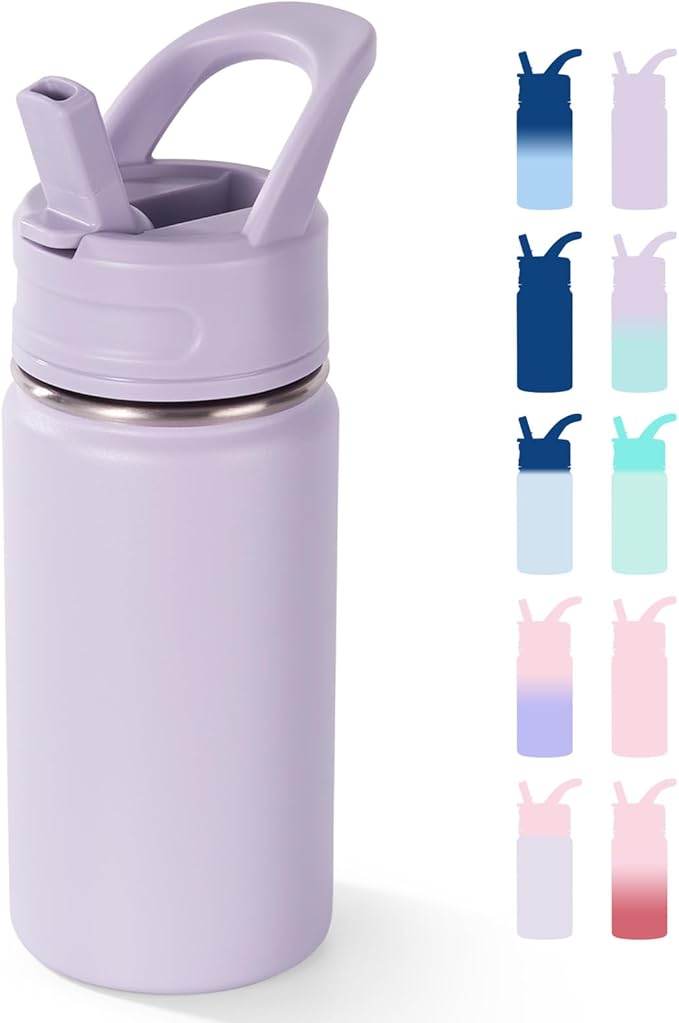
The After-School Win: Toddler water bottles seem simple until you’ve spent twenty minutes cleaning water off the deck because someone knocked theirs over for the fourth time before noon. A genuinely spill-proof, insulated toddler water bottle is the finishing piece of the summer routine because it removes the hydration friction entirely. The bottle lives by the door. Your toddler grabs it when the routine chart says “outside time.” They carry it themselves, which is a tiny independence win they absolutely love.
I swear by the insulated straw design for summer. Cold water stays cold for hours, which matters at 85 degrees during the water table block. The straw lid means your toddler doesn’t have to tip the bottle upside down to drink, so spills during active play are genuinely rare. A 12oz size is ideal for toddlers: the right size for small hands, light enough to carry independently, and just enough water to get through the outdoor block without running back inside to refill every ten minutes.
- The win: Cold water is available throughout the outdoor block without you managing refills constantly.
- The time-save: Hydration becomes self-directed instead of you reminding them to drink water every 20 minutes.
-
The game-changer for outdoor routines: Carrying their own water bottle gives toddlers a small sense of ownership over the routine, which makes them more invested in following it.
-
Fair warning: Insulated versions run a little heavier than basic plastic bottles. Fine for most toddlers at 2.5 and up, but check that your toddler can manage the grip comfortably.
Now you have all six pieces. Let’s look at what the whole system feels like when it’s actually working.
Your Summer Just Got a Whole Lot Calmer
Remember that 8:47am meltdown? The one where your toddler needed to know the exact order of everything, and you had no answer because there wasn’t one yet?
Here’s what that morning looks like now.
Your toddler wakes up and checks the routine chart before you even say good morning. Breakfast is on there. Outside time is on there. Quiet time is on there. They can see the whole shape of the day. The anxiety is gone because the predictability is there.
The routine chart (solve #1) gives your toddler the visual anchor they need to move through the morning independently. The water table (solve #2) anchors the outdoor block so both of you know exactly what outside time looks like and how long it lasts. The visual timer (solve #3) handles every single transition without a protest because the timer ends it, not you. The sunscreen spray (solve #4) removes the biggest bottleneck between you and getting outside on time. The quiet time kit (solve #5) gives you 30 minutes of actual rest in the middle of the day, every day. The water bottle (solve #6) keeps hydration rolling through the outdoor block without anyone stopping to manage it.
Suddenly summer has a shape. Your toddler knows what comes next. You’re not improvising every morning. The days flow. That is not a small thing, mamas. That is the difference between surviving summer and actually enjoying it with your littles.
If you’re looking for more ideas to fill those activity and snack blocks, check out my posts on toddler snack ideas and screen-free toddler activities for ideas that layer perfectly into a structured summer day.
You’ve got this, mama! Drop a comment and tell me which piece of the summer routine puzzle has been hardest to crack for your toddler. I read every single one and love hearing what’s actually happening in real homes.
Don’t forget to pin this article!