School Lunches for Elementary Kids They’ll Actually Eat
I call it The Full Lunch Comeback, and if you’ve experienced it, you know exactly what I mean.
You spent fifteen minutes packing a beautiful, balanced lunch. Grapes on one side. Goldfish crackers in their own little section. A sandwich cut into triangles because presentation matters, right? You felt pretty good about yourself as you zipped that bag up and sent your kid out the door.
Then 3 PM happens. You unzip the lunch bag and every. single. thing. is still there. The sandwich, the grapes, the goldfish. Completely untouched. Your kid shrugs and says “I wasn’t hungry” while immediately asking for a snack.
I’ve been through this cycle with all three of my kids, and it hit hardest with my twins in their first couple years of elementary school. One of them wouldn’t eat anything that had “touched” something else. The other one refused cold food after October. I was packing two completely different lunches every single morning and still watching both of them come home full. I did the math one week. I was spending a serious chunk of our grocery budget on food that just traveled to school and back.
Here’s how these six school lunch tools finally ended The Full Lunch Comeback in our house and turned 3 PM into an empty bag situation.
This post contains affiliate links. As an Amazon Associate I earn from qualifying purchases, at no extra cost to you!
The School Lunch System for Elementary Kids
The Open-Easy Hero: When They Can Do It Themselves
Let me tell you something I didn’t realize until way too late into elementary school. A huge reason kids don’t eat their lunch? They can’t open the container and they are too embarrassed to ask a teacher for help.
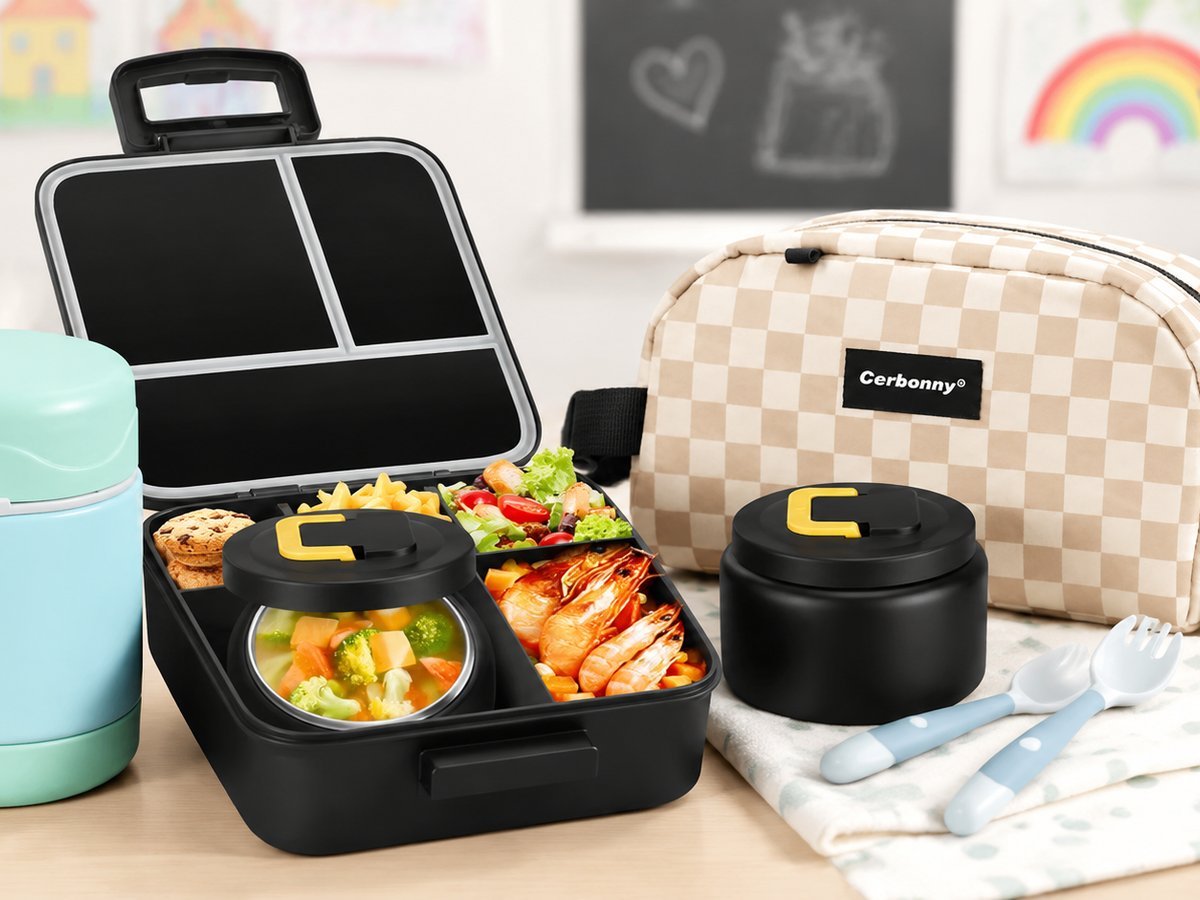
Why we love it: When my twins moved into a bento-style lunch box with easy-clip latches, the change was immediate. Elementary-age kids are at this stage where independence matters a lot to them. If the lunch box is hard to open, they’ll just skip it rather than raise their hand and ask. A bento box with five separated compartments also solves the “touching food” problem completely. My daughter went from sending back 80% of her lunch to actually eating because grapes were not touching crackers. That is the full explanation. Nothing else changed. Just separated compartments.
The 80/20 rule matters here: the product feature is the five separated compartments with easy-clip leakproof latches. The payoff is your kid actually eating lunch instead of coming home starving and demanding a bag of chips.
- The win: Kids can open it without adult help, which means the food actually gets eaten
- The time-save: Packing five compartments takes about the same time as packing a sandwich bag, but it replaces multiple containers
-
The habit-builder: Separation trains kids to try small amounts of lots of foods rather than refusing the whole thing
-
Real talk: Bento boxes have a fixed compartment layout, so if your kid needs two big sections and fewer small ones, it can feel limiting at first.

Now that your kid can actually open their lunch and food isn’t touching food, the next barrier tends to be temperature. Cold pasta and a sad lukewarm sandwich are two very different problems, and one of them is totally solvable.
The Warm Lunch Game-Changer: Hot Food That Stays Hot
Around the time my son hit third grade, he decided that cold food at lunch was basically a personal insult. We went through a phase where the only lunch he would consistently eat was mac and cheese, and cold mac and cheese is not mac and cheese. It is a punishment.
The Sunday Reset Hero: A good stainless steel food jar completely changed the cold-food conversation in our house. You fill it with boiling water for five minutes first to preheat it, then drain it, add the hot food, and seal it. My kids’ lunches have arrived warm five hours later at 12 PM, confirmed by the lunchroom monitor who asked my son what he was eating. That kind of detail builds trust.
The wide mouth opening is not a small thing, either. I’ve seen kids with narrow-mouth jars just give up because they can’t scoop food out with a regular spoon. A wide mouth means they can eat independently without wrestling the container.
After spending one afternoon reading through thousands of reviews on these, what I kept seeing was that the preheat step is the secret. Mamas who skipped it found the food lukewarm. Mamas who did the preheat step were getting hot soup at noon.
- The time-save: Preheat takes about five minutes the night before while you’re already in the kitchen cleaning up dinner
- The relief: Eliminates the “I don’t like cold food” excuse, which eliminates the full lunch coming home
-
The payoff: Leftovers from dinner become the easiest lunch you’ll ever pack
-
Fair warning: The preheat step is non-negotiable if you want hot food at noon. Skip it and you’ll be disappointed by lukewarm results.

So now you’ve got a bento they can open and a thermos for hot food. But here’s where mornings get tricky: ice packs. Are they in the freezer? Did someone leave them in the bag? Did you remember to restock? Let me show you how to eliminate that whole mental load at once.
The No-Ice-Pack Sanity Saver: One Less Thing to Forget
My neighbor showed up to school pickup one morning genuinely stressed because she realized she’d forgotten to put an ice pack in her daughter’s lunch bag. It was a hot day in September and she spent the whole day anxious about whether the food was safe to eat. I’ve been there too. Ice packs are one of those small but genuinely annoying things to manage, especially when you’re doing two or three lunch bags at the same time.
Why it makes mornings easier: A freezable lunch bag with a built-in cooling panel changes the whole system. You stick the whole bag in the freezer the night before, and by morning, the built-in panel is frozen solid. No separate ice packs to track, no rushing to the freezer to grab them, no checking whether they are frozen or just kind of cold. The bag IS the ice pack. My neighbor grabbed one after that stressful morning and told me a few weeks later that it genuinely removed a daily task she didn’t even realize she was spending mental energy on.
It fits a full bento box plus a snack and a water bottle with room to spare. And because it is insulated whether the panel is frozen or not, it works year-round.
- The flow-maker: Freeze the bag the night before while you’re packing lunches, wake up and grab it, done
- The relief: Never have a “did I pack a cold pack?” panic moment again
-
The game-changer for summer camps: Works exactly the same for summer activities so you get a full-year solution
-
One thing to know: You need to plan ahead the night before to freeze it. If you forget and pack it warm in the morning, it won’t perform as well until fully frozen again.

With the container, the thermos, and the bag covered, the next thing that slows down packing is tiny snacks. Crackers in one bag, grapes in another, cheese sticks in a third. Let me show you how to consolidate the whole snack situation.
The Snack-Packing Flow Maker: Replace Plastic Bags for Good
Here’s something I didn’t fully appreciate until I looked at our grocery receipts. We were going through a box of plastic snack bags every couple of weeks. Multiply that by a school year and it adds up fast. And every time I ran out, I was adding a last-minute task to my grocery run. The mental load of “are we out of snack bags” is real.
The After-School Win: Reusable silicone snack bags are the kind of swap that takes one weekend to commit to and then just runs. You pack snacks the same way you always did, but the bag goes in the dishwasher instead of the trash. The clear sides are a detail that sounds small but actually matters a lot for kids. My twins can see exactly what’s inside when they’re packing their own snacks, which means I have a real shot at getting them to participate in the lunch-packing process without it becoming a negotiation.
After going down a rabbit hole of reviews for these, I kept seeing that the leakproof seal is the detail that separates the good ones from the ones that end up in a drawer. Make sure whatever set you get has a solid double-zip or clamp seal.
- The win: Replaces single-use plastic bags for the entire school year, saving real money over time
- The relief: Dishwasher safe means cleanup is completely hands-off
-
The habit-builder: Clear sides help kids pack their own lunches independently, which is a genuine mom win
-
Skip this if: Your kids are in a phase of extremely specific texture preferences and need rigid compartments. For those kids, stick with the bento box for snacks.

Now the bag is covered and the snacks are handled. But on hot days, especially in August and September, you still need a backup cold source inside the bag. Here’s the slim solution that doesn’t steal food space.
The Stay-Cold Factor: Ice Packs That Actually Fit
Every parent who has packed school lunches for a few years has had the experience of putting in a standard-size ice pack and having it take up 40% of the bag. Then you’re playing Tetris with a sandwich and a snack bag and it’s 7 AM and nobody has time for this.
The Morning Flow Maker: Ultra-thin slim ice packs are exactly what they sound like: they are flat, they are small, and they slip between the bento box and the side of the bag without taking a single bite of space from actual food. I swear by having a set of six of these. You always have two or three frozen, you rotate them, and there is never a morning where you’re standing at the freezer hoping one managed to refreeze overnight.
They keep food at a safe temperature for six or more hours, which covers a full school day with room to spare. On days when my kids have after-school activities and the bag sits in a locker until 5 PM, I add two slim packs instead of one and it works.
- The time-save: Thin design means you can fit one in a bento box with the lid on, inside the bag, no rearranging needed
- The payoff: Six-pack means you’re set for the whole week even if you forget to refreeze a couple
-
The flow-maker for hot months: Double up in August and September without losing any food space
-
Real talk: They do not last as long as big ice packs. If you need to keep food cold for more than six hours, you’ll want two of these in the bag.
You have the full lunch system built now. There is one last piece, and it is the one most mamas forget until their kid comes home thirsty and grumpy. Let’s talk water.
The Hydration Habit-Builder: Water They’ll Actually Drink
My kids were coming home from school with full water bottles for a while and I couldn’t figure it out. It turned out the issue was simple: the bottles got warm by 10 AM, and warm water is not appealing to a seven-year-old. They were just not drinking it.
The Sanity-Saver: An insulated kids water bottle with a straw lid solved this almost immediately. Double-wall insulation keeps water cold for the full school day, which means by 2 PM there’s still cold water available. The straw lid is a practical detail: kids can drink without tipping the whole bottle, which means no accidental spills soaking their lunch. And because it fits in a standard lunch bag side pocket, it doesn’t take up space inside the bag.
Thousands of mamas are leaving five-star reviews on these, and the pattern I kept seeing was longevity: these bottles survive being dropped on tile floors, left in the car in July, and run through the dishwasher on repeat. For elementary school, where every single item gets dropped at least once a day, that matters.
- The relief: Cold water all day means kids actually drink it instead of coming home thirsty and asking for juice boxes
- The win: Straw lid means no tipping spills soaking the inside of the lunch bag
-
The game-changer for summer camps: Works for water parks, sports, and camp lunches too, so one bottle covers the whole year
-
The honest trade-off: The straw needs to be cleaned regularly or it can get musty. Run a straw brush through it every few days and you’re fine.

The Lunch That Comes Home Empty
Remember The Full Lunch Comeback? The full week of food that just traveled to school and back? Here’s where the system closes the loop.
The bento box with easy-clip latches means your kid can open it without asking for help, so the food actually comes out. The food jar means hot food arrives hot, which eliminates the cold-food complaint entirely. The freezable bag removes ice packs from your morning checklist. The reusable snack bags streamline packing and put your kid in the driver’s seat. The slim ice packs stay cold for the full day without stealing food space. And the insulated water bottle means they’re actually hydrated by the time they come home.
That is the shift: from a lunch that came home full every single day to a lunch bag that comes back empty. It sounds small until you realize how much mental energy went into packing those lunches and how much money was going straight into the trash.
You don’t have to overhaul everything at once. Start with the bento box, add the thermos when you’re ready, and build from there. But I promise, once you have the system running, the 3 PM pickup looks completely different.
For more lunch ideas that work for the whole school year, check out our full school lunch routine guide and grab a look at the best water bottles for kids if you want to compare options.
You’ve got this, mama!
Tell me in the comments: what is the one thing your elementary-age kid always refuses to eat at school? I want to know if there’s a product angle I’m missing!
Don’t forget to pin this article!