Parenting Books That Change Your Summer One Chapter at a Time
Let me be real for a minute. Last June I had 47 browser tabs open on my phone. Bookmarked parenting articles, Instagram saves, Reddit threads about big feelings and peaceful discipline, podcast episodes collecting dust in my queue. I had every intention of reading all of it while the kids were at camp for two weeks.
By August I had added 30 more tabs and closed the whole browser in frustration without reading a single one. All that collected wisdom and I still froze during the actual hard moments. My middle-schooler would shut down and I’d blank. My twins would melt down in sync and I’d react before I even had a thought.
What I needed was not more fragmented advice. I needed a framework. Six Kindle books later, I finally have one. Each book covers a different layer of the parenting puzzle, and together they replaced all 47 tabs with something I can actually use in real time.
This post contains affiliate links. As an Amazon Associate I earn from qualifying purchases, at no extra cost to you!
6 Parenting Kindle Books That Actually Build a Framework
These are not productivity hacks or quick tips. These are the books that give you a complete picture: why your kids do what they do, how to respond instead of react, and what a calmer family summer actually looks like.
The Reframe Hero: Why Your Kid Does What They Do
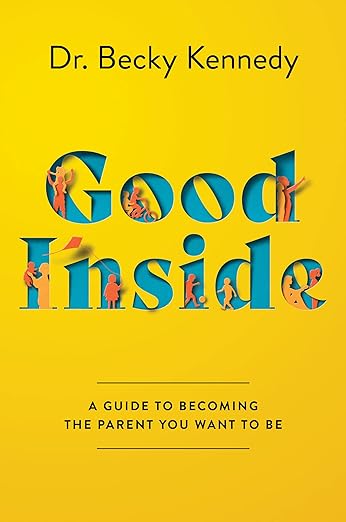
Why we love it: Every meltdown starts the same way in my house. My kid is escalating, I’m overwhelmed, and somewhere in my brain a voice asks “why are they doing this to me right now?” Dr. Becky Kennedy’s answer to that question is the entire engine of Good Inside. They’re not doing it to you. They’re doing it because they’re missing a skill or sitting with an unmet need, and acting out is the only communication tool they have in that moment.
That single reframe changes everything. When you stop seeing behavior as a personal attack and start seeing it as a signal, you stop reacting and start responding. I spent years fighting my twins through meltdowns before reading this book and finally understanding what was actually happening.
After going down a rabbit hole of who’s really changing modern parenting conversations, Dr. Becky Kennedy’s name comes up everywhere. Over a million Instagram followers, a waiting list for her courses, and five-star reviews from moms who say this was the book that finally made things click.
- The win: Replaces the reactive “stop it right now” cycle with a genuinely different lens on your child’s behavior
- The relief: You stop internalizing the hard moments as proof you’re failing at parenting
-
The habit-builder: Viewing every behavior as communication makes you more curious and less reactive with every passing week
-
Real talk: This book will make you rethink every parenting interaction from the past several years. Give yourself grace during that process because it is a lot to sit with.
You’ve got the WHY covered now. But understanding your kid in theory and actually getting them to cooperate on a Tuesday morning are two very different challenges.
The Cooperation Game-Changer: Getting Kids On Your Team This Summer
The Morning Flow Maker: Summer means kids home all day and you trying to get anything done while they orbit you like very loud satellites. The cooperation problem is not a personality thing and it is not a discipline failure. Michaeleen Doucleff’s research in Hunt, Gather, Parent turned out to be the most disruptive thing I read all year.
She traveled to Maya, Inuit, and Hadzabe families and found something that honestly floored me: kids raised in those cultures help around the house without being asked, cooperate without constant negotiation, and self-regulate far earlier than Western kids do. The difference was not that those kids are naturally easier. The difference was the approach, and she breaks it down into something she calls the TEAM method that any family can actually try.
I spent an afternoon reading through reviews on this one after my neighbor mentioned it, and the stories from parents who implemented the approach over a summer and saw real change are genuinely convincing.
- The payoff: The TEAM approach gives you a practical method for building cooperation that sticks through the school year
- The time-save: Kids who help because they feel genuinely needed stop requiring constant management for every single task
-
The game-changer for summer mornings: Asking kids to contribute instead of comply is a completely different dynamic and the difference in daily energy is noticeable within weeks
-
Fair warning: This is not a quick fix. The TEAM approach takes a few weeks to take hold and there will be a rocky middle stretch where you wonder if anything is actually shifting. Push through it.

Cooperation handles the daily rhythm. But what about the unpredictable moments: the parking lot meltdown, the complete shutdown at bedtime, the total wipeout that comes out of nowhere?
The Brain Science Win: Scripts for the Moments You Cannot Predict
Why it makes mornings easier: When your kid loses it completely, your instinct is to match their energy or shut it down fast. Both responses make it worse. The reason why is exactly what The Whole-Brain Child explains, and once you understand what is literally happening in your child’s brain during a big moment, you stop fighting the meltdown and start steering it.
Daniel Siegel and Tina Payne Bryson break down the upstairs and downstairs brain in terms simple enough to explain to a second-grader. The downstairs brain handles big emotions and survival instincts. The upstairs brain handles logic and reasoning. When emotions take over, the downstairs brain is running the show and the upstairs brain goes temporarily offline. You cannot reason with someone whose upstairs brain is unavailable, no matter how clearly you state the rule.
After reading through the reviews and parenting forums that discuss this book, the connect-then-redirect approach comes up again and again as the specific thing that changed how moms navigate hard moments. My son now uses the upstairs/downstairs language to explain his own big feelings, which is honestly something I never expected.
- The relief: Finally understanding why reasoning and logic make big moments worse instead of better
- The time-save: Specific scripts mean you are not improvising every single time a big emotion shows up
-
The flow-maker: The brain concepts in this book are simple enough for your kids to learn and apply to themselves over time
-
One thing to know: The second half of the book is denser than the first and benefits from a slow reread. The opening chapters are where most of the practical gold lives.

Now you have the science behind big emotions at any age. But if you’re heading into the tween years with a daughter, the emotional landscape shifts in ways that need a completely separate map.
The Tween Mom Hero: Understanding What Is Actually Happening
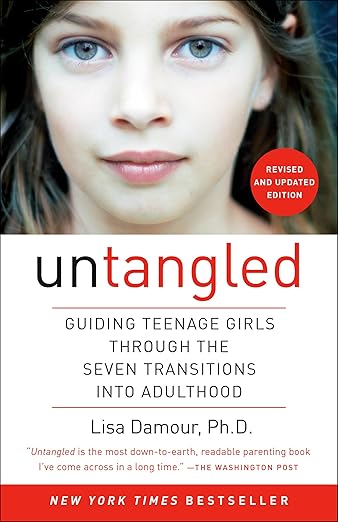
The After-School Win: My son is in middle school now and the changes happened fast. Lisa Damour’s Untangled is written specifically for moms navigating the developmental journey of girls between eleven and seventeen, and it is the book I want to put in the hands of every mama I know with a daughter in that age window.
She maps seven developmental transitions girls move through during those years. Pulling away from parents. Joining a peer group. Developing romantic interests. Building an adult identity. What changes is not just what your daughter does but why she does it, and understanding the why makes it possible to stay connected even through the eye rolls and door slams. Lisa Damour is a clinical psychologist who writes like a warm and very well-informed friend.
After going deep on parenting books specifically for the tween-to-teen transition, Untangled surfaced in every recommendation thread I found. Moms of daughters consistently say it is the book they wish they had read three years before they actually needed it.
- The win: Understanding each transition as a normal developmental stage instead of a personal attack changes your entire response to it
- The payoff: Moms who read this consistently report staying genuinely connected with their daughters through the hardest years
-
The relief: The seven-transition framework makes the chaos feel navigable instead of random and endless
-
Skip this if: You have only sons. The companion book Under Pressure covers girls under stress specifically and there is no direct boys equivalent in Damour’s catalog yet.
The big developmental picture is covered. But none of that framework matters if you do not have language for the actual moment your kid shuts down in the car on the way home from school.
The Daily Tactics Payoff: What to Do Right Now in This Moment
The Sanity-Saver: Every other book on this list builds your understanding. Peaceful Parent, Happy Kids by Laura Markham is the one that tells you what to DO in the specific hard moment you are standing in right now. It is the most immediately practical parenting book I have ever read, and the one I return to every time I feel like I’ve forgotten every strategy I ever learned.
The emotional coaching approach turns daily skirmishes into real connection points. Instead of ending a standoff with everyone frustrated and the relationship slightly worse than before, you end it with your kid feeling heard and the connection slightly stronger. Over the course of a whole summer, that compounds into something genuinely different inside your home.
I swear by this one. I have read it three times in four years and every single time I pick it up during a hard season I walk away with something I had forgotten to use.
- The game-changer for summer mornings: Scripts and phrases you can use during the hard moment itself, not just in calm reflection afterward
- The time-save: Works for all ages from toddler through teen so you are not juggling separate frameworks for kids in different stages at the same time
-
The win: Emotional coaching builds the parent-child relationship over time rather than slowly eroding it through constant low-level conflict
-
The honest trade-off: Some sections in the middle repeat the same core principles and you can skim them without missing anything. The opening and closing thirds are the strongest parts of the book.

You’ve got the daily tactics handled. The last piece is the bigger picture: why your family might feel constantly depleted even when nothing catastrophically bad is happening.
The Overwhelm Antidote: Why Less Is the Whole Point
Why This Earns Its Spot: Summer is exactly when over-scheduled, overstimulated family life becomes impossible to ignore. The noise level, the activity density, the sheer amount of stuff everywhere. Simplicity Parenting by Kim John Payne is the most convincing argument I have ever read for why slowing down is not a luxury but the actual mechanism that makes kids calmer, more cooperative, and more creative.
He identifies four layers of simplicity: the environment (less stuff), the rhythm (predictable daily patterns), the schedules (fewer organized activities), and filtering out the adult world from children’s emotional space. Every single layer is something a family can start adjusting this summer. The research he cites on overscheduled kids is the kind of thing that makes you want to look around your house and donate half of it before you finish the chapter.
After spending time reading through what child development researchers say about modern childhood overwhelm, Kim John Payne’s work kept surfacing as one of the most evidence-based cases for simplifying family life. The five-star reviews from moms who describe a quieter, calmer fall after a simplified summer are exactly what convinced me.
- The payoff: Kids with less complexity in their environment are genuinely calmer and more creative, and the research behind this is solid
- The flow-maker: Predictable daily rhythms reduce the number of decisions and negotiations that drain everyone by noon
-
The relief: Permission to simplify instead of add more is the most counterintuitive and most needed thing you will find in a parenting book this year
-
Real talk: This book will inspire a major purge of toys, activities, and commitments. Recommend clearing your weekend calendar before you finish the last chapter.

Your Summer Parenting Reading Framework
Remember that feeling of 47 browser tabs and still not knowing what to say when your kid completely falls apart? You’ve got the framework now, mama.
Good Inside gave you the lens: behavior is communication, and your kid is doing their best with the skills they currently have. Hunt, Gather, Parent gave you the cooperation approach: kids who feel genuinely needed actually help. The Whole-Brain Child gave you the scripts: connect first, redirect second, and stop trying to reason with a downstairs brain. Untangled gave you the map through the tween years: each transition makes sense when you know what it is. Peaceful Parent, Happy Kids gave you the daily tactics: language for the hard moment as it is actually happening. Simplicity Parenting gave you the bigger picture: your family needs less, not more.
That is a complete parenting framework in six Kindle books. One summer of reading and you walk into fall with a toolkit instead of a browser full of open tabs that guilt you every time you look at your phone.
For more ideas on building rhythms that work for your whole family, check out my posts on summer routine for toddlers and activities that fit into a mom’s day.
You’ve got this, mama! If one of these books already lives on your Kindle or if you’ve read something that should be on this list, I’d love to hear about it in the comments below.
Don’t forget to pin this article!