The Kindle Books Your Elementary Schooler Will Love This Summer
Every single summer night in our house, I ask the twins what they want to read before bed. And every single summer night, at least one of them stares at the Kindle screen and says, “There’s nothing good.” That means I am now crouched next to them in the dark, squinting at the Kindle store, scrolling through suggestions that they shoot down one by one. Too babyish. Too boring. Already read that. Twenty minutes later, I have downloaded something random, they have read three pages, closed it, and somehow the screen time argument has started all over again.
If that sounds familiar, I get it completely. The Kindle is supposed to make summer reading easier, not harder. But without the right books already loaded and ready, it just becomes another reason to scroll.
This summer I did something different. I built a reading list before the school year even ended. I did the research, I picked six Kindle books that cover every reading style in our elementary school age range, and I loaded them onto the Kindles in advance. No more nightly scrolling sessions. No more rejected downloads. Here is how these six books turned the nightly standoff into actual reading time for ages 6 to 11.
This post contains affiliate links. As an Amazon Associate I earn from qualifying purchases, at no extra cost to you!
The Easy-Entry Hero: Short Chapters That Actually Get Finished
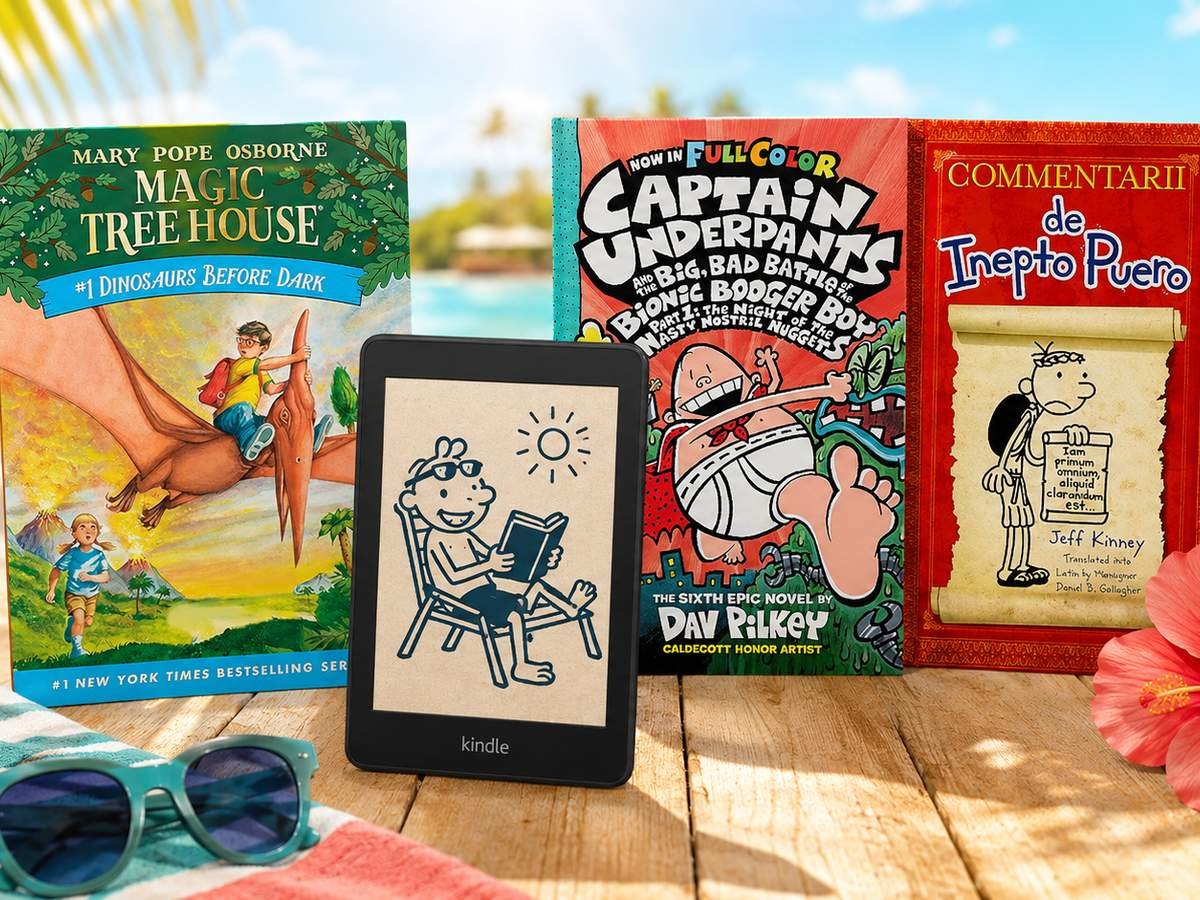
Why we love it: If your youngest elementary schooler, say first or second grade, claims there is nothing to read, Magic Tree House: Dinosaurs Before Dark is the answer. I swear by this series for kids who are just making the leap from picture books to real chapters. Each chapter is short enough to finish in five minutes, which means even a tired kid at 8 PM can say “just one more chapter” without it turning into a battle over bedtime. Jack and Annie travel back in time to the age of dinosaurs, and the adventure starts moving fast from page one. There is no slow buildup, no three-chapter introduction. They are in the dinosaur era by chapter two.
My twins started this series in first grade, and the biggest shift I noticed was that they stopped dreading bedtime reading once they had something this approachable. Short chapters mean natural stopping points, which means fewer fights about when reading time ends. For kids who struggle to get into books, the confidence boost of actually finishing a chapter every single night is a bigger deal than it sounds. It builds the habit without the pressure.
The win: Chapter lengths under 10 pages make it genuinely easy to fit in before lights-out without anyone melting down.
The time-save: With 50-plus books in the series, you can load several titles at once and not worry about running out of new material for weeks.
The relief: A simple, fast-moving adventure that hooks younger readers without overwhelming them.
Real talk: The vocabulary stays simple throughout, so if your second grader is already reading chapter books comfortably, they might breeze through book one faster than you expect. That is honestly not a bad problem to have. The next book is right there waiting.

Now that the younger readers in the house have a series they can actually finish, the next challenge is the kid who says reading is boring and would rather watch YouTube for three hours. That one takes a completely different kind of book.
The Reluctant Reader Game-Changer: No More Screen vs. Book Battles
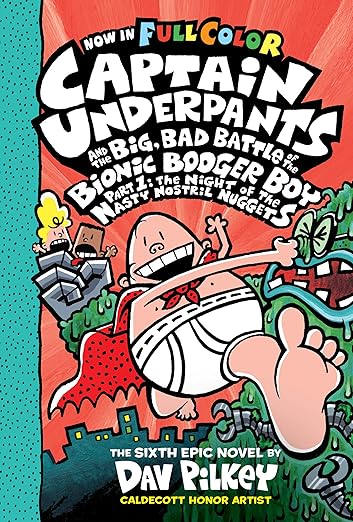
The Sanity-Saver: I am going to say something a lot of parents resist hearing: graphic novels absolutely count as reading, and for reluctant readers they might be the only thing that actually works. Dog Man was the book that finally cracked the case with my son. He had told me on multiple occasions that he was just not a reader. He was wrong. He just had not found the right book yet.
The format is genius. It is part comic strip, part chapter book, and the humor is legitimately funny. Not just kid-funny, but actually funny. Dav Pilkey knows exactly what makes elementary-age kids laugh, and he delivers on every single page. For a kid who resists sitting still for walls of text, the visual format pulls them in without the intimidation of page after page of words alone. My son finished the first book in two sittings and immediately asked for the next one. That is the goal, right? A kid who asks for more books without being told to go read?
What I love most about this pick is what it does for a reluctant reader’s self-image. When a kid who says they hate reading finishes a whole book in an afternoon, something shifts. They realize they can do it. That is worth more than the book itself.
The time-save: At around 200 pages with heavy illustration, most kids fly through this one in a single afternoon, making it a great rainy-day solution.
The payoff: Once a reluctant reader discovers they can finish a whole book, the mental block about not being a reader starts to loosen.
The habit-builder: Twelve books in the main series means you can offer the next one the moment they finish and keep the momentum going all summer long.
Fair warning: It reads fast. Thirty to forty minutes is typical for motivated readers, so grab a couple of books in the series upfront rather than downloading just one. You will thank me when they finish it before bed and immediately want more.
Dog Man handled the “I hate reading” problem. But what about the kid who is a bit older and needs something that feels more like their actual sense of humor? The one who is rolling their eyes at picture books but is not quite ready for a dense novel? That is where the next pick comes in.
The Laugh-Out-Loud Factor: For the Kid Who Swears They Hate Reading
The After-School Win: Here is the thing about Diary of a Wimpy Kid: it does not feel like reading. It feels like flipping through your friend’s funny journal. The format is a mix of handwritten diary entries and Greg Heffley’s sketchy little doodles, and for kids ages 8 to 12, it is genuinely irresistible. I have seen kids who would never voluntarily pick up a chapter book laugh out loud at this thing and refuse to put it down.
After going down a rabbit hole of reviews and parent forums, one thing kept coming up again and again: kids who finish book one immediately ask for book two. That is the sign of a winner. The Kindle version works great because the doodles and handwriting-style text translate well on the screen, and for a kid who reads on a device, the format feels like something special rather than just another book they were told to read.
The real gift here is that Greg is relatable. He is not a hero. He makes questionable choices, he is not always kind, and he is doing his best to survive school. Kids see themselves in him, which is exactly what keeps them turning pages. You do not have to convince them to keep reading. They just do.
The payoff: Kids who fly through book one tend to want the full series, which means summer reading basically handles itself once you start them here.
The time-save: The diary format with doodles makes 217 pages feel like nothing, so even slower readers will not feel overwhelmed by the length.
The relief: Humor-first storytelling makes reluctant readers forget they are doing reading at all, which is the whole point.
One thing to know: Greg is not exactly a role model, which sometimes sparks really funny conversations about what NOT to do. I have found those conversations are actually kind of great. Lean into it when your kid brings it up.

You have now covered ages 6 through 12 who need something funny, visual, or fast-moving to get started. But what about the kid who is ready for something with a little more emotional weight? Something that stays with them long after the summer ends? That is where the next book earns its spot.
Why Charlotte’s Web Earns Its Spot on Every Reading List
Why This Earns Its Spot: I read Charlotte’s Web for the first time when I was about eight, sitting on my grandmother’s porch in August. I still remember it. That is the kind of book this is. For elementary kids who are ready to feel something real in a story, Charlotte’s Web is the one that sticks.
E.B. White’s prose is simple and beautiful. It does not talk down to kids, and it does not try to be trendy. It tells the story of Wilbur the pig and Charlotte the spider with such honesty and warmth that kids get pulled in naturally. Thousands of mamas have recommended this one for generations, and the reason is simple: it is the kind of book that teaches something important without ever feeling like a lesson. Friendship, loyalty, love, and saying goodbye are all in there, handled gently enough for an 8-year-old but genuinely moving for anyone who reads it.
For a Kindle reading list, this is the book that rounds out the emotional range. Dog Man and Diary of a Wimpy Kid keep things funny and light. Charlotte’s Web teaches kids that books can make them feel things, and that feeling things is good. For kids around ages 8 to 10, that emotional vocabulary is worth building through story, and this one does it in the most beautiful way.
The win: Beautiful simple language naturally builds vocabulary and reading fluency without it ever feeling like homework.
The habit-builder: A story this emotionally resonant tends to stay in a kid’s memory long after the summer ends, which builds a genuine love of reading over time.
The relief: At under 200 pages, it is the perfect length for a meaningful read that does not overstay its welcome.
Skip this if: Your elementary schooler is very sensitive to sad endings. Charlotte’s Web will make them cry. That is part of the magic, honestly, but if your kid is going through a hard stretch right now, save this one for a more settled season.

Charlotte’s Web covers the emotional territory beautifully. Now let’s talk about the biggest summer reading opportunity on this list: the book series that can carry an older elementary kid through the entire summer if you let it.
The Series Anchor: The Book That Turns Summer Into a Reading Marathon
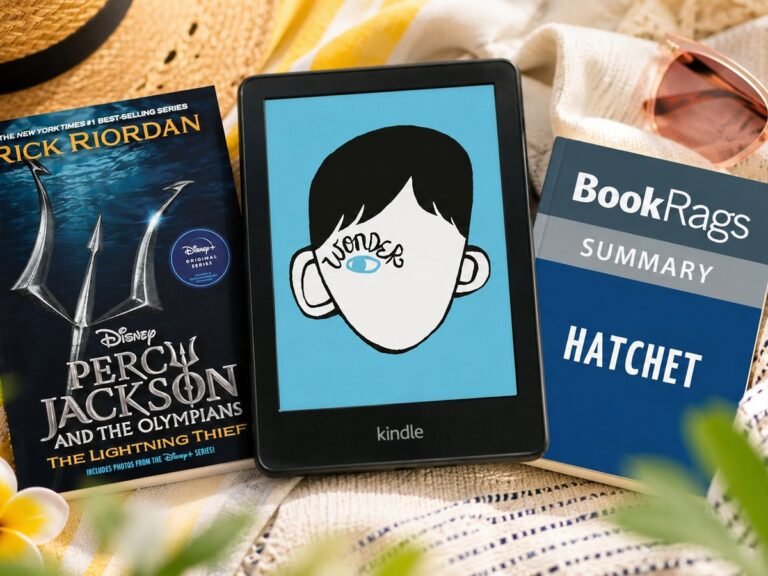
The Routine Payoff: My middle schooler discovered Percy Jackson in fourth grade, and I am pretty sure he read all five books in the original series before school started back up in September. That is what happens when a kid finds the right series at the right time. Percy Jackson and the Lightning Thief is that book for kids ages 9 to 12 who are ready for something longer, faster, and more epic.
Rick Riordan takes Greek mythology and drops it into a modern story about a 12-year-old who discovers he is the son of a god. Every single chapter ends on a cliffhanger. I mean every one. It is genuinely hard to put down, even for adults. The humor is sharp, the action moves fast, and the mythology is woven in so naturally that kids come away actually knowing the Greek myths without feeling like they studied anything. My son spent two weeks on this series one summer and told me it was the best reading summer he ever had. That is a direct quote. From a middle schooler. About books.
After going through the parent reviews and conversations on this one, the pattern is consistent: kids who love action, adventure, and a hero who is imperfect finish this in under two weeks and immediately ask for the next book. For summer reading, the five-book original series is a secret weapon. Load book one, and you are covered.
The game-changer for summer routine: Percy Jackson is long enough to last a real reading sprint. At 375 pages, it is a meaningful commitment that pays off in a big way.
The time-save: One great series recommendation covers months of reading without you having to search for the next pick over and over.
The win: Greek mythology becomes genuinely interesting, which sometimes sparks curiosity about history and other stories in the same world.
The honest trade-off: At 375 pages, this one works best for kids reading at a solid third grade level or above. If your kid is still building stamina, have them warm up on shorter books earlier in the summer and save Percy Jackson for when they are really rolling.

Percy Jackson handles the adventure-craving, older elementary reader perfectly. But what about the kid who sits somewhere in the middle? Not quite into thick chapter books yet, but past the simplest graphic novels? The last pick on this list was made for exactly that reader.
The Visual Storyteller: For the Kid Who Needs to See the Action
The Morning Flow Maker: Some kids are wired to understand stories through pictures as much as words. That is not a reading problem. That is a learning style, and Hilo: The Boy Who Crashed to Earth is built for exactly that reader. This full-color graphic novel is visually stunning. Every page is rich and lively, the humor is fast, and the story about a robot boy who crash-lands on Earth and befriends two human kids moves at a perfect pace for ages 7 to 10.
After reading through the reviews on this one, the theme I kept seeing was that kids who usually read two books in a summer read the entire Hilo series. Seven books. All of them. Because once they start, the story pulls them in completely. The friendship between the characters feels real, the sci-fi adventure is exciting without being scary, and the full-color art style makes every page feel like a reward for reading the last one.
The full-color format matters on a Kindle. Hilo is one of those books that truly shines on a tablet or a color Kindle screen. The robot designs and action sequences pop in a way that makes it feel more like an animated series than a traditional book, which is part of why visual learners respond to it so completely.
The flow-maker: Full-color illustrations make every page visually engaging, which keeps kids reading without the energy dropping between chapters.
The payoff: Seven books in the main series means a visual learner has more than enough to get through the entire summer.
The relief: For the kid who resists plain chapter books but has outgrown basic picture books, Hilo lives exactly in the right space between those two worlds.
One thing to know: Full-color graphic novels tend to have a slightly higher price point on Kindle than plain text books. Grab a couple of titles in the series so the per-book value feels right.

Your Kids’ Summer Reading List Is Ready
Remember the nightly Kindle standoff? The twenty-minute scrolling session that ended with a rejected download and the iPad back in someone’s hand? You have the fix now.
You have the easy-entry series for your youngest reader who needs short, fast chapters (Magic Tree House), the reluctant reader solution that does not feel like “real reading” (Dog Man), the laugh-out-loud chapter book that converts even the most stubborn screen kid (Diary of a Wimpy Kid), the emotional classic that stays with them long after summer ends (Charlotte’s Web), the epic adventure series that can carry an older elementary kid through the whole summer (Percy Jackson), and the full-color visual storytelling pick for the in-between reader (Hilo). That is a complete summer reading system, not just a list.
Here is what a summer with these books loaded on the Kindles actually looks like: your kid picks up the Kindle at bedtime without being told. They ask to read before asking for screen time. They finish a book and feel proud of themselves. You hear “can I get the next one?” instead of “I’m bored.” That is what a good reading list does. It removes the friction and makes the right choice the easy choice.
If you want more ideas for keeping elementary schoolers engaged this summer, check out my posts on screen-free activities for kids and chores for elementary age kids for a full summer routine that works for the whole family in 2026.
Drop a comment below and tell me which book your kids loved most! I would love to hear what is working in your house this summer.
You’ve got this, mama!
Don’t forget to pin this article!