The Chore System That Gets Elementary Kids Actually Helping
My twins are eight. They are sweet, funny, and absolutely capable of sweeping a floor without creating a bigger disaster. So why was every single evening in our house ending with me standing in the kitchen, arms crossed, asking for the third time if anyone had done their chores?
The Nightly Nag Loop is what I call it now. It goes like this: dinner is done, I ask the kids to take care of their evening responsibilities, they wander off, I remind them, someone argues about whose turn it is to vacuum, and suddenly it is 8:15 PM and the floor still has not been swept. The whole cycle eats 30 to 40 minutes of family wind-down time every single evening. I was the bottleneck every night.
Here is how the right tools and one simple visual system turned that into a routine that basically runs itself by 7 PM.
This post contains affiliate links. As an Amazon Associate I earn from qualifying purchases, at no extra cost to you!
What Chores for Elementary Age Kids Actually Need to Work
Let me be real for a minute. The issue in our house was never that the kids did not know what to do. The issue was that the knowledge lived in my head and they were waiting for me to download it into theirs every single night. The moment I shifted that accountability to a visual system they owned? The nagging dropped by about 80 percent inside of two weeks.
Elementary-age kids, roughly five to ten, are genuinely capable of real household contributions. They can sweep, vacuum, sort laundry, rinse dishes, and clean up after themselves. What they need is a system that does not require mom to be the operating system. The six products below are the pieces that make that system work in a real family with real chaos and three kids who have real opinions about everything.
The Accountability Game-Changer: When Kids Run Their Own Checklist
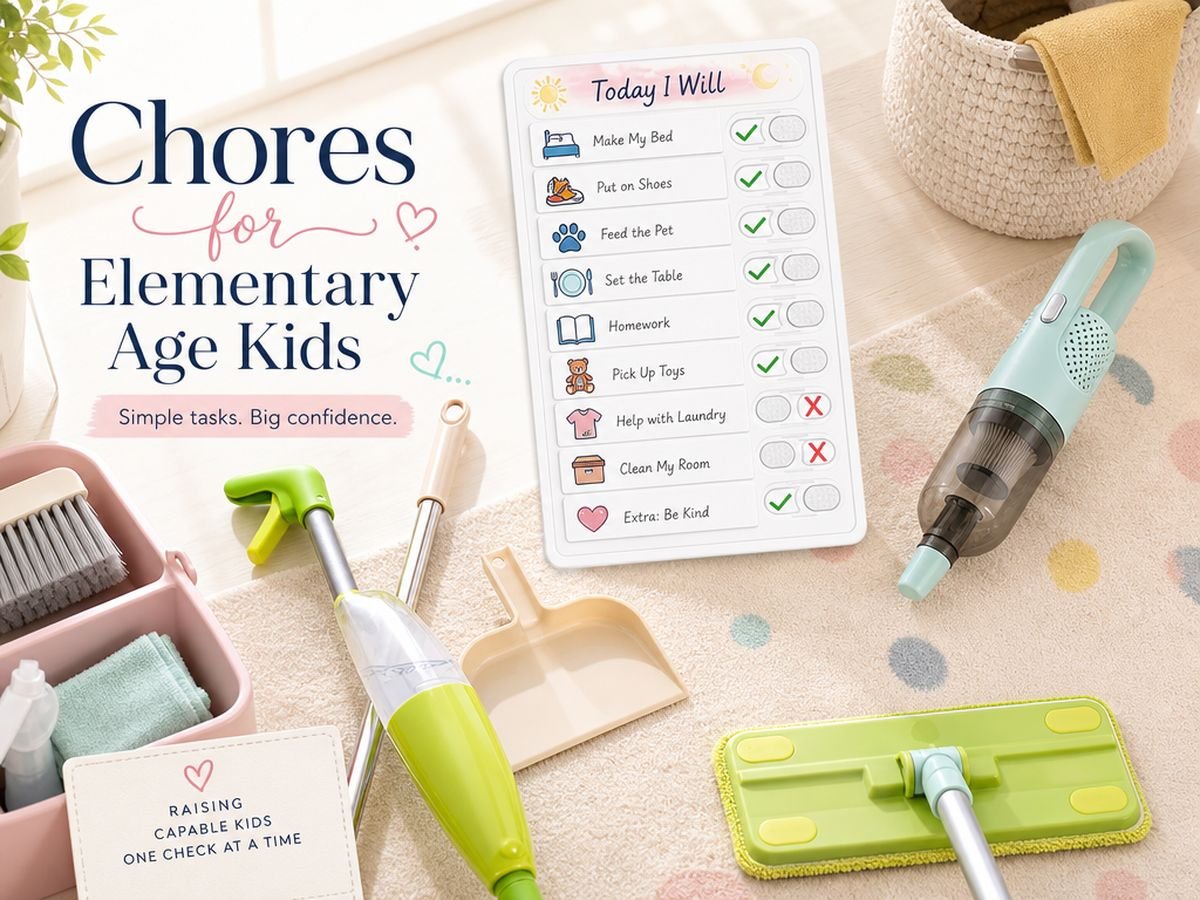
Why we love it: The biggest single shift in our chore routine happened the day I stopped being the walking checklist and put a magnetic chore chart on the wall instead. Now my twins move their own magnets when a chore is done. They check the board, they see what is left, they handle it. The “I forgot” excuse no longer applies because the chart does not forget, and the board is the authority, not me.
Thousands of mamas are leaving five-star reviews on magnetic reusable chore charts for exactly this reason. After going down a rabbit hole of reviews, what I kept seeing was: kids engage deeply with a system they can physically interact with. Moving a magnet feels like completing something real, and that tactile feedback matters for elementary-age brains.
- The win: Kids know what is expected without a single word from mom.
- The habit-builder: Weekly reset takes two minutes and teaches kids that routines repeat.
- The flow-maker: No more mid-evening arguments about what was or was not already done.
Real talk: Some charts have a lot of moving pieces to set up initially. Block out 20 minutes the first time to customize it for your kids’ specific responsibilities. Worth every minute.

The chart handles the “who does what” problem beautifully. But here is the thing: once your kids know their responsibilities, the next question is whether they have tools that actually work for their size. Handing a seven-year-old an adult broom and expecting a clean floor is a recipe for frustration all around.
The Floor-Cleaning Hero: No More Spreading the Mess Around
The Sanity-Saver: I bought my twins a child-sized broom, mop, and dustpan set when they were six, and I genuinely wish I had done it two years earlier. The problem with giving elementary kids an adult broom is that the handle is too long, the angle is wrong for their height, and they end up pushing debris around instead of picking it up. Their own set, sized for them, means they can actually finish the job. My daughter sweeps the kitchen after dinner now, without being asked, because she knows she can do it.
My neighbor had the same experience with her seven-year-old: the moment the kid had tools that fit her, she stopped seeing floor cleaning as a mom job and started seeing it as something she was genuinely good at.
- The time-save: Floor sweeping after meals comes off mom’s list completely.
- The payoff: Kids feel genuinely capable and proud, not like they are playing house.
- The relief: No more waiting for the adult broom to be free before the floor gets done.
Fair warning: The mop component is best used with water only for this age group. Skip the cleaning solution unless you are supervising closely. Elementary-age kids are enthusiastic and will absolutely over-soak the floor.

Now that the floors are swept, there is still the carpet situation. Sweeping does not help there. And dragging out the full-size vacuum for a kid who just wants to clean their room? That is not a habit that sticks. What actually works is something they can operate completely on their own.
The Room-Cleaning Factor: Fast Enough That Kids Can Actually Use It
Why it makes afternoons easier: A lightweight handheld cordless vacuum is the product that made my son’s room actually stay clean between his weekly deep cleans. He eats crackers at his desk. The crumbs were a whole situation. Now he has his own handheld vacuum on his bookshelf and he runs it after snacks without me saying a word. It takes him 90 seconds and the floor looks like a person lives there instead of a cracker factory.
After spending an afternoon reading through the reviews so you don’t have to: the key feature to look for is weight. Under two pounds is the sweet spot for elementary-age hands, and cordless is non-negotiable for kids because cord management is a whole extra cognitive task they do not need.
- The game-changer for after-school snacks: Kids clean up their own mess immediately instead of leaving it for the evening.
- The win: Lightweight design means real independent use, not just supervised attempts.
- The relief: The full-size vacuum stays in the closet for scheduled weekly cleaning instead of being dragged out for every crumb situation.
One thing to know: Handheld vacuums need charging. Assign a spot where it lives on the charger and teach the kids to plug it in after use. That habit takes about a week to stick but it is worth the initial reminder period.

Floors swept, crumbs vacuumed. Now let’s talk about the category that sends most mamas to the edge faster than anything else: laundry. Specifically, the pile of unsorted clothes that appears at the bottom of the stairs and has no explanation and no owner.
The Laundry Saver: Kids Sort, You Stop Asking
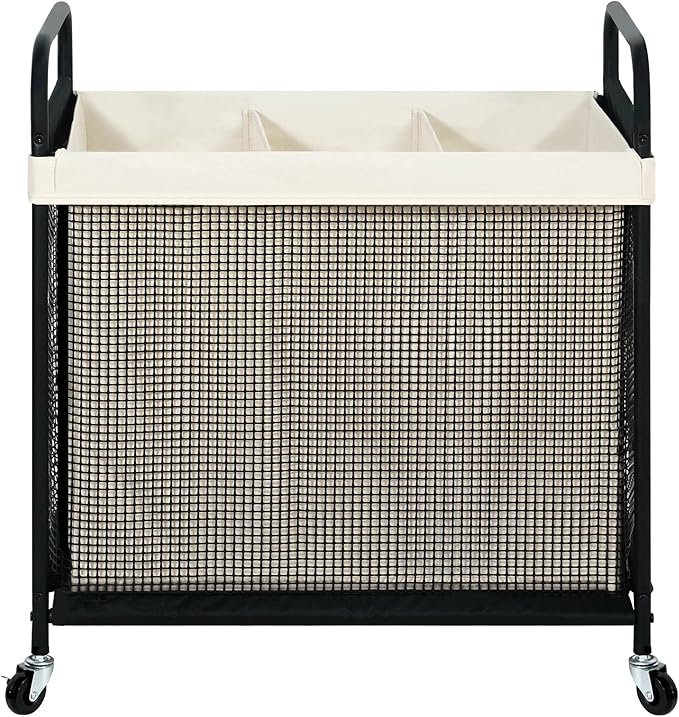
The Sunday Reset Hero: A three-section laundry hamper in each kid’s room is one of those changes that sounds too simple to matter until you actually do it. My twins sort their own clothes: darks in one section, lights in another, delicates in the third. I save probably 20 minutes of sorting on laundry day. And the pile at the bottom of the stairs? Gone, because the system lives in their rooms and they use it.
After going down a rabbit hole of options, the collapsible fabric versions with labeled sections get the most consistent praise. They are compact enough to fit in a child’s bedroom without taking over a corner, and the color-coded labels make sorting intuitive even for younger elementary kids who are still building that habit.
- The payoff: Laundry sorting moves off mom’s list permanently.
- The habit-builder: Kids learn how laundry works by doing it, not by watching.
- The flow-maker: Laundry day is faster because the pre-sort is already done.
Skip this if: Your kids are under six. The three-section concept works well for ages seven and up when they can read and remember the categories. For younger elementary kids, start with a single hamper and introduce sorting later.
Laundry sorted. But there is one more piece to the cleaning puzzle that trips up a lot of elementary-age kids: they physically cannot reach the sink without help. Which means rinsing their plate after dinner and washing their hands after chores still requires mom to be present. A step stool changes that entirely.
The After-School Win: Kitchen and Bathroom Independence, Finally
Why This Earns Its Spot: A sturdy non-slip step stool is not glamorous. It is also one of the highest-ROI items in this list because it unlocks so many other chores. Once your elementary-age kid can reach the kitchen sink independently, they can rinse their own plate, wash their hands after outdoor chores, and help prep food at the counter. One step stool, multiple jobs unlocked.
I swear by ours. We have had it in the kitchen for two years and it has quietly transformed how much the kids can do without me in the room. My daughter fills her own water bottle at the sink now. My son rinses his breakfast bowl before school. These are small things that add up to a lot of minutes returned to my morning.
- The time-save: Dish rinsing after meals becomes a kid job without mom as the height assistant.
- The win: Kids wash their own hands independently before meals, removing a daily reminder from mom’s list.
- The relief: Step stool folds flat so it is not a permanent kitchen obstacle between uses.
The honest trade-off: Some step stools wobble if kids shift weight too far to one side. Look for one with a wide base and rubberized non-slip feet and that issue largely disappears. Always check the weight limit before you buy.

One product left, and this one is the glue that holds the whole system together. Because right now, your kids have a chore chart, child-sized tools, a vacuum they can use, a laundry sorter, and sink access. But if the supplies are scattered around the house in various cabinets, the routine still breaks down at “where is the stuff?”
The Routine Payoff: Their Caddy, Their Responsibility
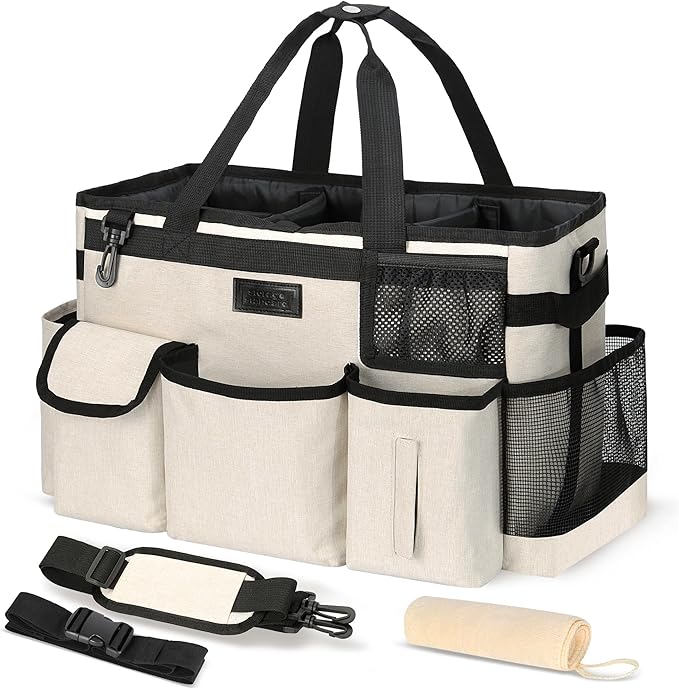
The Morning Flow Maker: A dedicated kids cleaning caddy is the final piece that signals chore time is real. Each kid has their own. It lives on a low shelf. When it is chore time, they grab their caddy, they go to the rooms on their list, and they come back when done. There is a clear start and a clear finish. Mom is not tracking where the cleaning spray went or whether anyone remembered to grab a cloth.
Thousands of mamas rave about giving kids their own supplies for exactly this reason. The accountability is physical. When the caddy is put back on the shelf, you know chore time is over. It is a routine with a built-in start trigger and a built-in finish signal, which is exactly what elementary-age brains need.
- The win: Kids know where their supplies are without asking, which removes the biggest friction point in getting started.
- The habit-builder: Grabbing the caddy becomes the signal that chore mode is on.
- The game-changer for evenings: Chore time has a clear beginning and end, which means kids get to the fun stuff faster and stop dragging their feet.
Real talk: Fill the caddy with kid-safe supplies only. A mild all-purpose spray, microfiber cloths, and their dusting tools are plenty. Keep anything that needs to stay out of reach in a separate cabinet.
The Payoff: What Our Evenings Look Like Now
Remember the Nightly Nag Loop? Dinner wraps up, and I used to brace for the negotiation. Now I don’t.
My twins check their magnetic chore chart and move their magnets. My son grabs his handheld vacuum and does his room. My daughter sweeps the kitchen floor with her own broom. One of them sorts the laundry into the hamper sections. They both rinse their dinner plates at the sink with zero assistance from me. When they are done, the caddies go back on the shelf and they are asking me what the evening activity is.
It took about two weeks for this to become automatic. There was definitely a learning curve and some cheerleading on my end during the first few days. But by week two, the chart was doing the work and I was not. The mental load of being the household chore enforcer lifted almost completely. That is 30 to 40 minutes of my evening, every night, back in the win column.
You do not need a perfect system or a spotless house. You need the right tools sized for the right kids, paired with a visual anchor that keeps the routine moving without you in the middle of it. That is genuinely the whole thing. You’ve got this, mama!
If this sparked any ideas for your own family’s routine, drop your questions or wins in the comments below. I read every single one. And if you’ve got little ones not quite at elementary age yet, my post on chores for toddlers is a great place to start. When they’re older and suddenly too cool for all of this, check out chores for teens.
Don’t forget to pin this article!