Summer Routine for Toddlers: 6 Products That Actually Structure Your Day
Summer Routine for Toddlers: 12 Products That Actually Structure Your Day
It sounds so good in May.
Summer with my toddler. Slow mornings, backyard water play, popsicles, long naps, golden hour at the park. You can picture it. You pin the aesthetic version of it. You tell people you’re looking forward to it.
And then June 15th arrives and your toddler has whined eleven times before 9 AM, you’ve already run out of ideas for what to do next, they refused both the activity you set up AND the snack you offered, and it’s 97 degrees outside and you have four more months of this.
I have been there. And the thing that saved my sanity wasn’t finding better activities or being more creative or getting off my phone (though, okay, that last one helped a little). It was building a real routine for the summer days. A predictable, product-backed, actually-repeatable structure that my toddler could flow through without me improvising every 45 minutes.
These 12 products are what built that system. They’re organized by time block , morning, midday, afternoon, evening , because that’s how a toddler summer day actually runs. Each one solves a specific piece of the chaos so you’re not freelancing the whole day.
This post contains affiliate links. If you buy through my links I may earn a small commission at no extra cost to you. It helps keep this blog running and I genuinely appreciate it!
Why Toddlers Need a Summer Routine (And Why You’ll Snap Without One)
The Boredom Spiral Is Real
Here’s what nobody tells you when you’re picturing summer: toddlers cannot self-direct unstructured time. It’s not a toddler flaw , it’s developmental. They don’t have the executive function to think “I’m bored, I’ll find something engaging to do.” What they do is escalate. They pull at you, they get into things, they whine, they melt down. And you end up functioning as their activity director from 7 AM to 8 PM with no breaks and no plan.
The solution is not more activities. It’s structure. A predictable day with defined blocks gives your toddler a sense of what comes next , and that alone regulates them more than any Pinterest activity could.
What a Structured Toddler Summer Day Actually Looks Like
I break the day into four blocks:
- Morning Block (7 AM – Noon): Energy out, breakfast, outdoor play while it’s still cool
- Midday Block (Noon – 3 PM): Lunch, quiet time, nap, independent play
- Afternoon Block (3 PM – 6 PM): Second wind activity, cool-down outdoor play
- Evening Block (6 PM – 8 PM): Dinner, wind-down, predictable bedtime routine
Each block has a specific product that anchors it. That’s what makes the routine actually repeat without you having to rebuild it from scratch every day.
How These 12 Products Build Your Day Block by Block
I’m not going to give you a product list. I’m going to give you a system. Each product below does one specific job in the summer routine. Take out any one of them and something in your day gets harder. Keep all of them and your summer actually starts to feel like you had a plan.
Morning Block (7 AM – Noon): Start the Day Without the Chaos
The Sleep Boundary Saver: No More 5 AM Bedroom Invasions
The summer routine doesn’t start at 7 AM. It starts the moment your toddler wakes up , which, without any guardrails, can be 5:30 AM because it’s light outside and their internal clock has no guidance.
The Hatch Rest is the single product that fixed this for me. You program it in the app and the light glows a calm color , we use blue , while your toddler should stay in bed. When it turns green, it’s morning. That’s it. That’s the rule.
Within a week, my toddler stopped coming into our room before the green light. Not because of discipline. Because the clock told them what to do and toddlers love a clear, concrete signal way more than they love a parent explaining “it’s still nighttime.”
It doubles as a sound machine for naps. The app gives you full scheduling control. And it works at 18 months , you just have to do a few consistent “green means go” reminders to lock in the concept.

One honest con: It needs Wi-Fi and the app to unlock the scheduling features, which makes it annoying to travel with. Not a dealbreaker, but worth knowing.
Now that your toddler is up at a reasonable hour, the next challenge is getting outside before the heat hits , and that means a sunscreen application that doesn’t turn into a wrestling match.
The Outdoor Prep Shortcut: Sunscreen in 60 Seconds or Less
Summer outdoor play has exactly one villain: the sunscreen application. Your toddler hates it. You hate it. It takes three minutes of physical struggle, half of it ends up on their shirt, and by the time you’re done neither of you wants to go outside anymore.
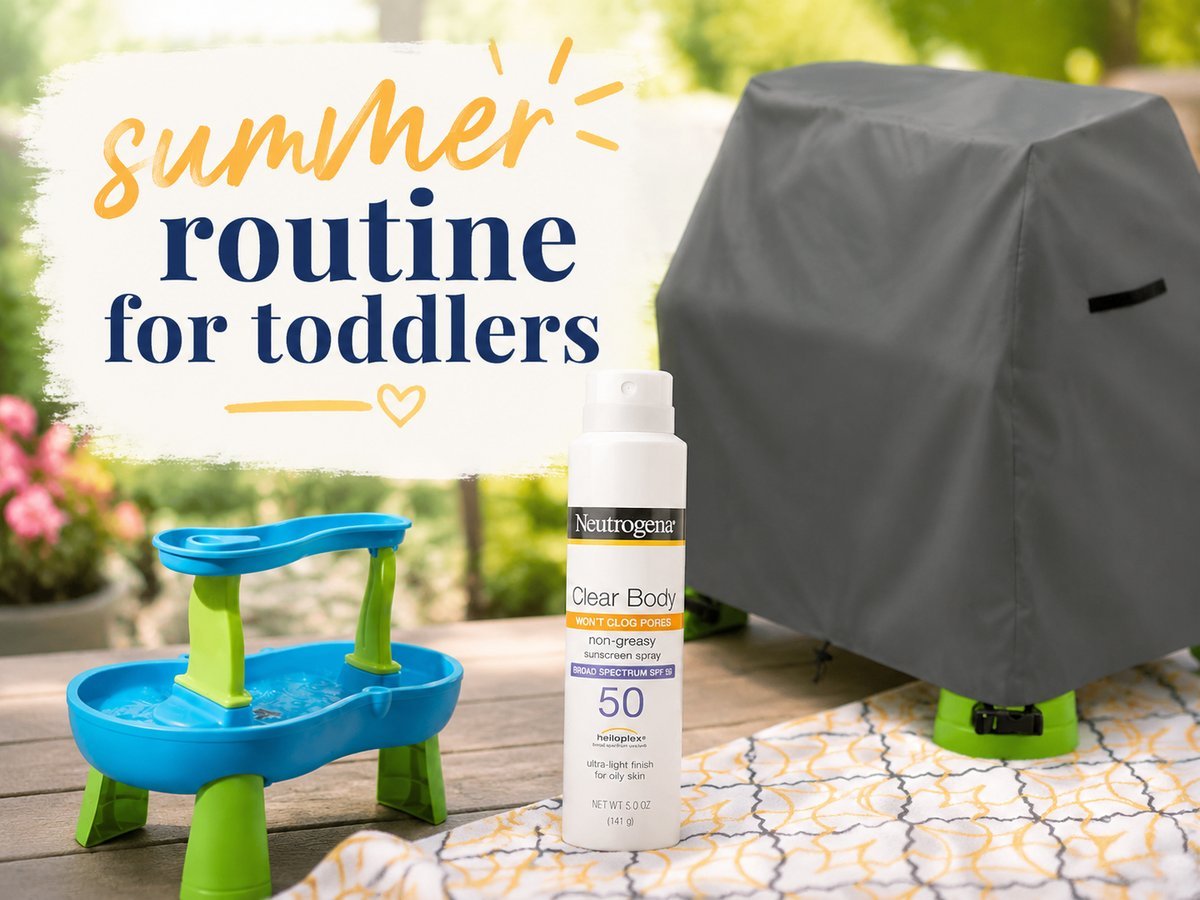
Continuous spray sunscreen changes this. Point, spray, done. No smearing, no chasing, no crying (usually). You get full coverage in about 30 seconds on a moving toddler, and then you can actually get out the door before it hits 85 degrees.
I use a mineral formula with SPF 50 , you’ll want to rub it in slightly to fully absorb, but it still takes a fraction of the time lotion does. This is the gate-opener for the whole morning outdoor routine. If sunscreen is a battle, you’ll start skipping outdoor time, and then the whole structure falls apart.

One honest con: You’ll still need to rub it in a bit for complete coverage , it’s not fully hands-off like some chemical sprays. But it’s still 10x faster than lotion.
Once they’re protected and outside, the morning needs an activity that burns real energy without requiring you to be the entertainer.
The Morning Energy Dump: Where the Toddler Energy Goes
The goal of the Morning Block is simple: get the physical energy out before the heat hits so that quiet time and nap actually work later. The water table is the single best tool for this.
Set it up the night before. In the morning, take them straight outside, fill it up, and step back. A good water table holds a toddler’s attention for 45-60 minutes with zero input from you. They’re pouring, splashing, experimenting. They’re using their hands and their whole bodies. You can sit in a chair with your coffee and actually drink it while it’s hot.
The Step2 Rain Showers Splash Pond is the one I recommend because the standing height is right for toddlers, it holds a useful amount of water, and the rain shower feature gives them something specific to interact with. It’s not the fanciest water table on the market but it’s reliable and it lasts multiple summers.

One honest con: You need to drain and wipe it down regularly , standing water turns green faster than you’d think in summer heat. Make it a weekly task and it’s fine.
Water table done, energy burned, time to come inside for breakfast. And here’s where the next system piece matters.
The Mess-Free Breakfast Win: They Feed Themselves, You Drink Your Coffee
Breakfast with a toddler can go one of two ways: you spoon-feed them while your coffee gets cold and the plate migrates to the floor, or they feed themselves while you actually sit down.
The suction plate is the difference. The ezpz Happy Mat has a suction base that genuinely grips smooth surfaces, and the divided sections keep foods from touching (toddler non-negotiable). They can load their own fork and eat independently because the plate stays where they put it.
Pair it with a soft-tip toddler fork and they have full breakfast independence. You’re not hovering. You’re not chasing. You’re not mopping the floor mid-bite. You’re drinking your coffee while it’s still warm, which is a thing that should happen to you more often.
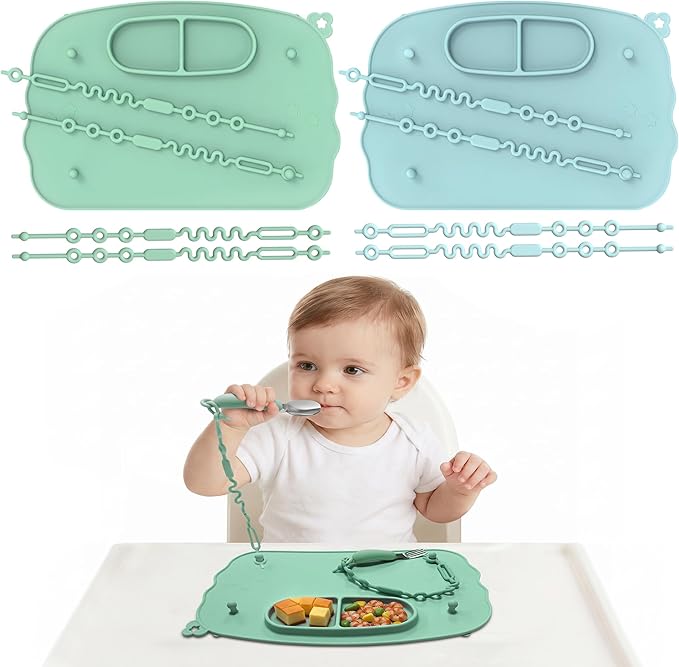
One honest con: The suction works best on smooth high chair trays or flat tables , it doesn’t grip textured or ridged surfaces as well. If your high chair tray is bumpy, test it before trusting it fully.
Midday Block (Noon – 3 PM): The Witching Hour Survival Kit
The midday block is where unstructured summer days fully collapse. Kids are tired but won’t admit it, you’re trying to transition from morning mode into nap mode, and there’s a 90-minute window that either leads to a good nap or to nobody sleeping and everyone crying.
These four products are your midday toolkit.
The Independent Snacker: No More “Mommy I’m Hungry” Every 8 Minutes
Pre-fill two or three of these the night before. Put them in a low drawer or a basket they can reach. Call it their snack station. When they’re hungry, they go get a snack themselves.
The Munchkin Click Lock snack catcher has a flexible top that lets small hands reach in but keeps snacks from flying out when they tip it (which they will). The click-close lid means they can open and close it independently. At 18 months mine couldn’t do it; at 22 months she figured it out and never looked back.
The mental load reduction of “I’m hungry” is real. Pre-filled snack cups mean you’re not jumping up every 20 minutes. They’re exercising independence, you’re not being constantly interrupted. It’s a small system but it makes the midday block run noticeably more smoothly.
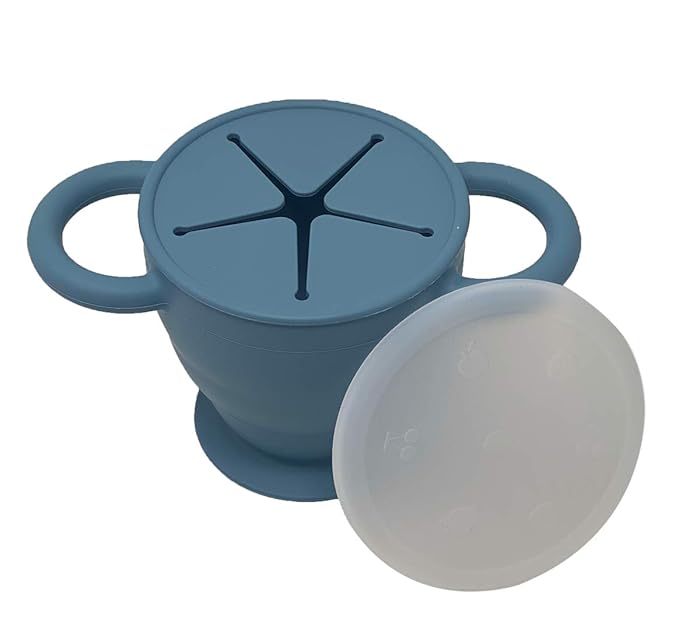
One honest con: The opening is small, so it works best for dry snacks like Cheerios, goldfish, or puffs. Not ideal for sliced fruit or cheese.
With snacking handled independently, the next piece is quiet activity that actually holds attention.
The Quiet Time Anchor: Activities That Hold Attention Without a Screen
Before nap, before quiet time, toddlers need a landing spot , something they can sit down and do while they wind down. The Melissa & Doug jumbo knob puzzles work because they’re calibrated perfectly for toddler hands and toddler attention spans. Big pieces, clear shapes, satisfying chunky knobs. They can work it independently without getting frustrated, and the activity is calm enough to shift their energy toward rest.
I keep a rotation of two or three of these in a low basket. When it’s quiet time, they choose one. No screens, no asking me to play. They know this basket means quiet.
After a week or two, the puzzles become a nap cue. Their brain starts associating “puzzle time” with “rest is coming.” That’s the routine working.

One honest con: Some toddlers blow through puzzles in 10 minutes and lose interest. Pair with a snack cup and rotate pieces regularly to extend engagement.
The Creative Mess That Actually Cleans Up
Here’s the thing about toddlers and messes: they need them. Sensory engagement, creative expression, mess-making , it’s genuinely important for development. The reason most moms avoid it is because the cleanup takes longer than the activity.
Washable fingerpaint is the fix. Lay down a dollar-store plastic tablecloth, put out the paints, let them go completely wild. The washable formula comes off skin, off most surfaces, and off clothing if you catch it before it dries. Cleanup is two minutes if you have the tablecloth setup: fold it up, toss it, wipe their hands.
Crayola washable fingerpaints are the standard for a reason , they’re genuinely washable (I’ve tested this), the colors are bright and satisfying, and they’re cheap enough that you don’t stress about waste. High sensory engagement + genuinely calm activity = excellent pre-nap energy shift.
![Crayola Washable Finger Paints (6ct), Toddler Paint Set, Nontoxic Finger Paint for Kids, Arts & Crafts Supplies for Toddlers, Teacher Classroom Must Have [Amazon Exclusive]](https://m.media-amazon.com/images/I/81wJg3kH33L._AC_SX679_.jpg)
One honest con: Even washable paint can set in fabric if you leave it , use an art smock or an old shirt and you won’t have any casualties.
Now the creative mess is done and it’s nap time. Which only works if the environment is right.
The Nap Defender: Protecting the Sleep Window All Summer
Summer nap disruptions are real: lawn mowers, neighborhood kids, car doors, dogs barking. Your toddler stirs at a partial wake cycle and instead of going back down, they’re fully up because of the noise outside.
A white noise machine blocks all of that. The LectroFan is the one I recommend because it has 20 sound options (10 fan sounds, 10 white noise varieties) and genuine consistent coverage , not tinny speaker noise. It also trains the routine over time: the sound machine going on means sleep is happening, and toddler brains lock onto those associations fast.
Consistent nap = functional afternoon. Skipped or shortened nap = everyone is crying by 5 PM. This is the product that protects the part of the day that protects everything else.

One honest con: It’s on the pricier end for a white noise machine. But a reliable nap is worth the investment , you’ll make up the cost in sanity within a week.
Afternoon Block (3 PM – 6 PM): Burn the Energy, Save Your Sanity
The post-nap afternoon is actually the easiest block if you have two things: an outdoor activity that requires zero setup and a way to keep them cool. Start with the free one.
The Cheapest Hour of Outdoor Entertainment
Hand your toddler a bucket of sidewalk chalk, point at the driveway, and go sit on the front steps. That’s the whole setup.
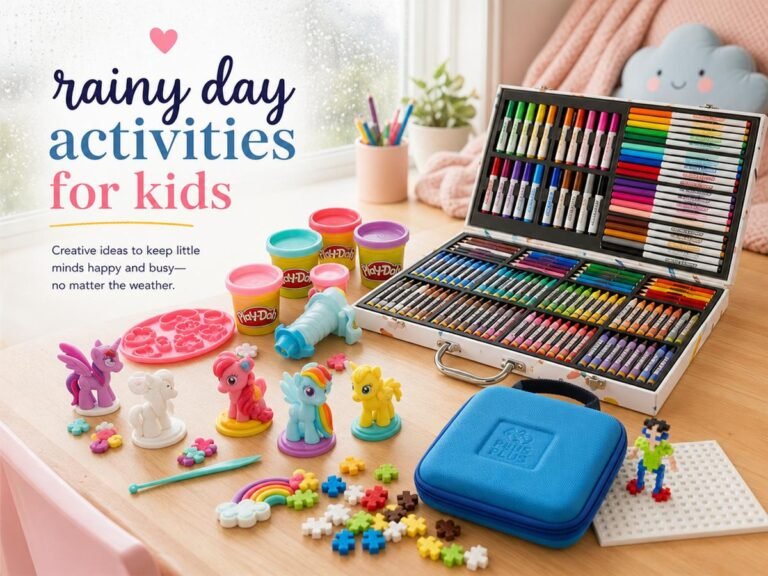
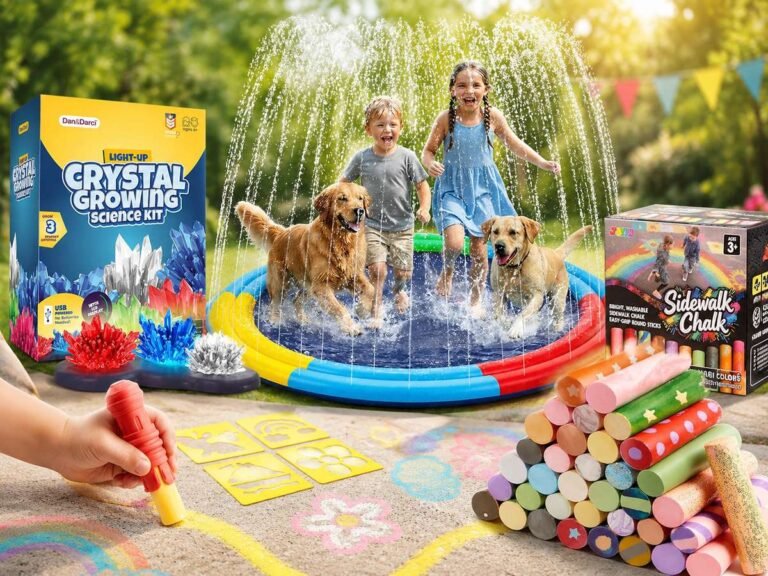
I know this sounds too simple. But Crayola sidewalk chalk genuinely buys 30-60 minutes of uninterrupted outdoor creative play with zero cost, zero screen time, and zero supervision stress. They draw, they trace their feet, they scribble over everything you’ve ever drawn, they carry the chalk pieces around as characters. The 48-count box is worth it , the variety of colors makes it feel exciting every single time.
It washes off in the rain. You can hose it down in 2 minutes. There is no cleanup burden here whatsoever.
 Crayola Sidewalk Chalk
Check price on Amazon
One honest con: Only works on concrete or asphalt. Grass and wood don’t cooperate.
Once the chalk creativity is spent and the afternoon sun is real, you need a cool-down activity.
The Cool-Down Game-Changer: Outdoor Play When It’s Hot
The problem with hot summer afternoons is that outdoor play requires managing heat, which requires a pool (supervision-heavy) or the sprinkler (setup-heavy) or the hose (chaotic). A splash mat solves all of this in one flat product.
Connect it to your garden hose. Lay it on the lawn. Turn on the water. Done. The Melissa & Doug Sunny Patch sprinkler mat activates when the water runs and keeps toddlers cool with zero pool safety concerns and no elaborate setup. They run through it, they roll on it, they stand there getting soaked with the most satisfied toddler face you’ve ever seen.
Setup is one minute. Cleanup is rolling it up and hanging it on the fence. And it burns real afternoon energy so that dinner and bedtime transition smoothly.

One honest con: Needs decent water pressure to activate the sprinkler feature properly. If your outdoor spigot has low pressure, the effect is underwhelming.
After water play it’s wind-down time , the transition between big-energy afternoon and calm dinner prep.
The Wind-Down Transition Tool: Buying Yourself 20 Real Minutes
This is the gap in every toddler afternoon: you need 20 minutes to start dinner, clean up the water play aftermath, and decompress. Your toddler is coming off high-energy play and not ready to just sit quietly with nothing.
A toddler sticker activity book bridges this gap. The Highlights Hello workbooks are perfectly calibrated for this , sticker pages, simple scenes, age-appropriate prompts. They sit at the table (or the couch), they work through the stickers, and they’re engaged for a full 20 minutes without needing you.
That’s your dinner window. That’s your sanity window. It’s a $10 product that buys you 20 minutes of genuine quiet every afternoon. I buy 2-3 at a time so there’s always a fresh one when the current one is finished.

One honest con: They’re single-use , once the stickers are gone, the book is basically done. Stock up.
Evening Block (6 PM – 8 PM): The Routine That Makes Bedtime Work
All of this , the morning structure, the nap, the afternoon energy burn , only pays off if the evening lands properly. And the evening only lands properly if your toddler knows exactly what comes next.
The Bedtime Anchor That Holds the Whole Day Together
Here’s what I learned the hard way: toddler bedtime resistance is almost always about uncertainty. They don’t know when it will happen, they can’t see when it ends, and they’re not in control of any of it. That’s a recipe for stalling, crying, and a 9 PM bedtime that kills your evening.
Visual bedtime routine cards show them the sequence. Bath. Pajamas. Brush teeth. Story. Lights out. They can see exactly what comes next, they can check items off as they go, and they feel in control of the process. That alone removes most of the resistance.
Toddlers who’ve been following a routine all day are primed for this. The structure they’ve been living in all day makes the bedtime sequence feel like the natural ending it is.

One honest con: Takes 2-3 nights to establish as a real cue. Stick with it even if the first few nights feel rocky. The payoff comes in week two.
Your Full Toddler Summer Day at a Glance
Here’s the complete schedule. Steal it, adjust it, make it yours.
The Sample Schedule (Steal This)
| Time | Block | Activity | Product Anchoring It |
|---|---|---|---|
| 7:00 AM | Morning | Wake up when light turns green | Hatch Rest |
| 7:15 AM | Morning | Breakfast , they feed themselves | ezpz Happy Mat |
| 8:00 AM | Morning | Sunscreen + outside | Spray Sunscreen |
| 8:15-9:30 AM | Morning | Water table play | Step2 Water Table |
| 9:30 AM | Morning | Indoor cool-down snack | Snack Cup |
| 10:00 AM | Midday | Quiet activity time | Melissa & Doug Puzzle |
| 10:30 AM | Midday | Creative play | Washable Fingerpaints |
| 11:15 AM | Midday | Lunch | |
| 12:00 PM | Midday | Nap , white noise on | LectroFan |
| 2:30 PM | Afternoon | Wake up, snack | Snack Cup |
| 3:00 PM | Afternoon | Outside: sidewalk chalk | Crayola Chalk |
| 4:00 PM | Afternoon | Water cool-down | Splash Mat |
| 5:00 PM | Afternoon | Wind-down activity | Sticker Workbook |
| 5:30 PM | Evening | Dinner | |
| 6:30 PM | Evening | Bath | |
| 7:00 PM | Evening | Bedtime routine cards | Visual Routine Cards |
| 7:30 PM | Evening | Lights out |
How to Adapt It for Your Family
You don’t have to copy this exactly. The framework is: morning energy out → midday rest → afternoon energy out → evening wind-down. Plug in your family’s times and your toddler’s specific nap window.
If your toddler doesn’t nap anymore, extend the midday quiet time block with the puzzle and art activities. If you have two kids at different ages, the water table and splash mat both work for older kids too , you just swap out the puzzle for something age-appropriate.
The routine will feel clunky the first week. That’s normal. By week two, your toddler will be moving through it on autopilot. By week three, they’ll be leading parts of it themselves.
Frequently Asked Questions About Summer Routines for Toddlers
What is a good daily schedule for a toddler in summer?
A 4-block structure works well: morning outdoor play while it’s cool, a midday nap or quiet time, afternoon energy burn, and a predictable evening wind-down. The key is keeping the time blocks consistent each day so your toddler builds internal expectations about what comes next.
How do I keep my toddler busy in summer without screen time?
Rotate between outdoor water play (water table, splash mat), sensory and creative indoor activities (fingerpaints, puzzles), and simple outdoor activities like sidewalk chalk. The key is not relying on any one activity to hold attention for too long , 30-45 minute blocks with transitions keep the day moving without battles.
What age should toddlers have a routine?
As early as you can build one. Even 12-15 month olds respond to routine cues , the white noise machine going on means nap, the sticker book means quiet time. The earlier you build the associations, the smoother the routine runs. Most toddlers have the cognitive ability to follow a simple visual routine by 18-24 months.
How do I handle toddler boredom in summer?
Structure is the cure for toddler boredom, not more activities. When toddlers know what’s coming next, they don’t spiral into the boredom whine cycle , they’re already mentally moving toward the next block. The products in this post each anchor a specific block so boredom doesn’t have a window to set in.
What outdoor activities are best for toddlers in hot weather?
Water play is the gold standard: water tables in the morning when it’s cooler, splash mats in the afternoon for cool-down. Limit peak-heat outdoor time (usually 11 AM – 3 PM) and use that window for inside quiet activities. Always sunscreen before any outdoor time , the spray formula makes it fast enough that you’ll actually do it consistently.
I know summer with a toddler sounds like it should just be fun and spontaneous and easy. And there are beautiful moments of exactly that. But underneath the beautiful moments, there needs to be a structure , a predictable flow to the day that both of you can relax into.
These 12 products are that structure. They’re not fancy. They’re not all expensive. They’re just the right tools in the right places that make a toddler summer day feel manageable instead of like a 13-hour improv performance.
You’ve got this. Now go pin this before school lets out and you need it.