6 Chores for Toddlers That Actually Stick
Here’s the scene. You’re unloading the dishwasher and your toddler appears at your elbow, arms raised, announcing “I do it! I do it!” You hand them the spoons. They drop half of them, pick them up, drop them again. Ten minutes later you’ve somehow made the whole task longer, not shorter. Welcome to The “I Do It!” Trap. This is the phase where your toddler’s desire to help is completely real, but every attempt costs you double the time it would have taken to do it yourself.
When my twins were about two and a half, this phase was relentless. I’d let them wipe the table and find crumbs pushed onto the floor. I’d ask them to put toys away and discover them sitting inside the toy bin hosting a full tea party. I started quietly doing chores after bedtime or during nap just to avoid the whole circus. And then I felt guilty about it, because I knew that including them was good for them. I just didn’t know how to make it actually work.
The answer wasn’t a parenting strategy. It was the right tools. A magnetic chore chart they could manage themselves. A cleaning set that fit their actual hands. A learning tower so they could reach the counter safely. A few more pieces that turned “I do it!” from a daily standoff into a routine that genuinely worked for both of us. Here’s how these six products turn that toddler energy into real help that sticks.
This post contains affiliate links. As an Amazon Associate I earn from qualifying purchases, at no extra cost to you!
The Clarity Hero: When They Finally Know What to Do Next
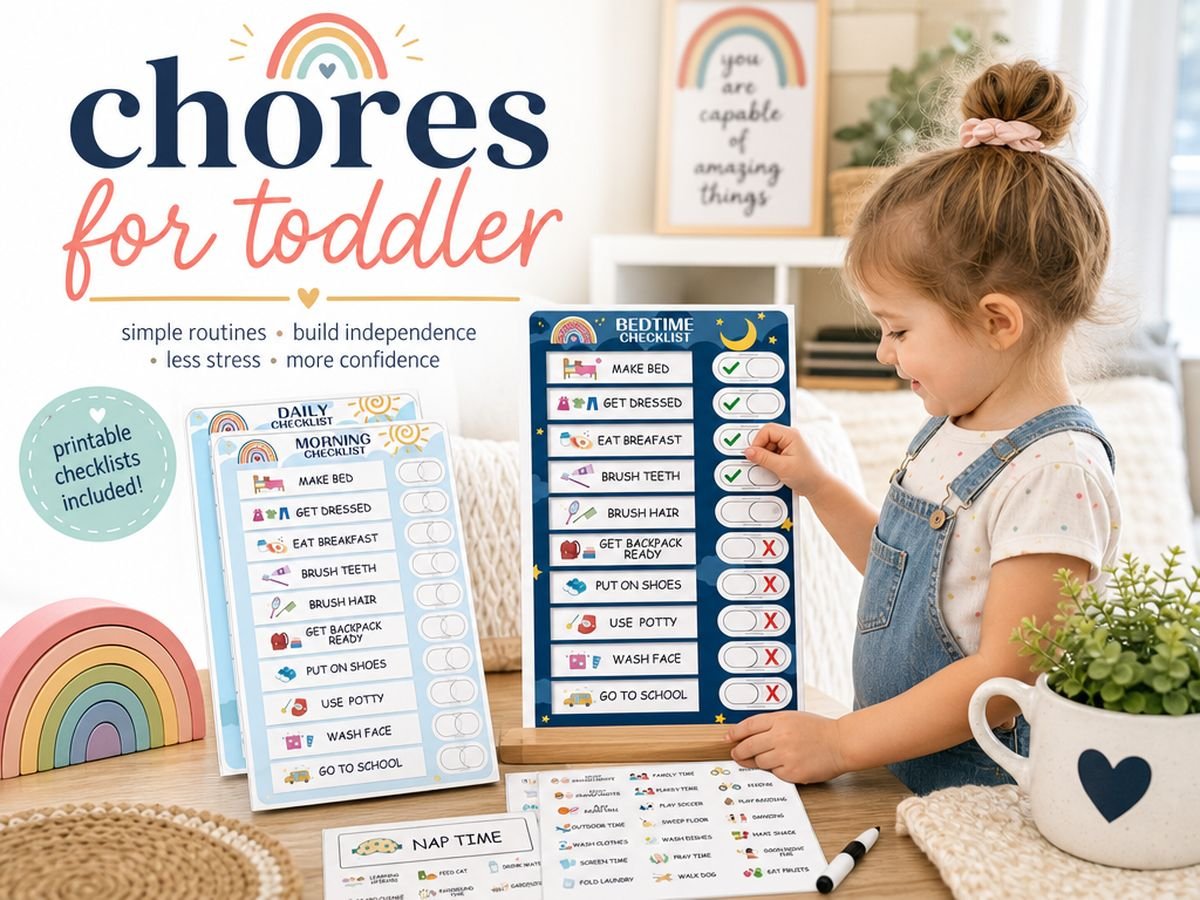
Why we love it: The number one reason chores for toddlers fall apart isn’t attitude. It’s that your toddler has absolutely zero idea what “help” actually means. You say “go do your chores” and they stare at you like you just asked them to file taxes. A magnetic visual chore chart with pictures changes this completely. Instead of waiting for you to tell them the next step, they walk up to the chart, see the picture of sweeping, and go get the broom. No prompting needed. No redirecting. No standing in the hallway asking “but WHAT do I do, Mama?”
The picture-based format is where the magic lives. Even a 2-year-old who can’t read can look at a picture of a broom and figure out the task. And when they move that magnet over to “done,” something real happens. Their whole face changes. They did it. They know they did it. That little burst of completion pride is the engine that makes them want to do the next task on the list.
I’ve seen this work with both of my twins. One of them would wake up in the morning and walk straight to the chart before I even had coffee. I did not train that. That’s what happens when the task is clear, the expectation is visible, and the reward is right there on the board.
The win: The daily “what do I do now?” loop disappears, which saves you at least 10 minutes of redirecting per morning.
The time-save: Picture-based tasks mean they don’t need to read or decode anything, so even a 2-year-old can work through the list mostly on their own.
The habit-builder: Moving their own magnet to “done” builds the completion habit loop faster than praise alone ever could.
Real talk: Some mornings the chart gets completely ignored and you’ll still be prompting every step. That’s just a toddler morning. The chart still shortens the overall chaos even on the hard days, so it’s worth having on the wall regardless.

The chart tells them WHAT to do. But it can’t do the work for them. And if you hand a toddler an adult-sized broom to sweep the floor, you’ve just created a different kind of problem.
The Sweeping Game-Changer: Tiny Hands, Real Results
The Morning Flow Maker: Here’s something nobody really tells you: the reason toddlers are bad at sweeping isn’t lack of effort. It’s that the broom is three feet taller than it should be for their arms. A kid-sized cleaning set with a real broom, mop, and dustpan that actually fits their hands changes what they’re capable of. After reading through hundreds of five-star reviews on these sets, I kept seeing the same thing over and over. The moment mamas switched their toddler from a toy version to a real kid-sized one, the sweeping started working.
Not perfectly. Not without some crumbs getting missed in the corner. But well enough that the floor is measurably cleaner after they sweep, and that is the entire point. When the tool fits their body, they can do the job. When it doesn’t, they’re just flailing and you’re re-sweeping behind them, which defeats the whole purpose.
Having their own set also matters more than it sounds. When it’s theirs, sweeping is their job. Not “helping Mama.” Not borrowing the grown-up tools for a minute. Their job. That ownership shift makes a real difference in how consistently they show up for it without being told.
The payoff: They can sweep up kitchen crumbs after meals without you hovering, saving you at least 5 minutes of cleanup per meal without any extra effort on your part.
The win: A kid-sized dustpan that actually works means crumbs end up in the trash and not just relocated to a new corner of the kitchen.
The relief: Having their own cleaning set makes sweeping feel like their responsibility, not a favor they’re doing for you, and that reframe sticks as they get older.
Fair warning: The mop part is genuinely less effective on actual spills. Use their cleaning set for dry sweeping tasks and save the wet cleanup for your own mop.

Floor tasks are handled. Now here’s what happens at mealtime when your toddler wants to help in the kitchen. They can’t reach the counter. So they start dragging a dining chair over, and that’s when everyone in the room gets nervous.
The Safe Access Factor: Counter Height Without the Chaos
Why it makes mornings easier: A learning tower is one of those things that sounds optional until you have one and realize it should have been in your kitchen from day one. It’s an adjustable step stool with side rails that lets your toddler stand safely at counter height. No wobbly chairs. No grabbing the edge of the counter to keep from tipping. No you standing next to them with your arms half-raised just in case. Just a stable platform where they can pour, stir, wash produce, and actually participate in the kitchen like a real helper.
My friend picked one up when her youngest was about 22 months and told me at school pickup that her son now helps make his own lunch every single morning. She’s not making it for him anymore. He loads his own ingredients, stirs, and closes his container. She’s nearby but not actively doing it. That shift, from her doing everything to him doing most of it, happened within three weeks of the learning tower landing in her kitchen.
The kitchen helper habit this builds is one of the most valuable things you can start now. Toddlers who help in the kitchen become elementary schoolers who can actually do things. You’re not just saving time today. You’re building capacity that pays off for years, and this is the tool that makes that participation physically possible.
Why it makes mornings easier: Counter access gives toddlers a sense of real contribution during kitchen tasks, which makes them more cooperative during the rest of the chore routine.
The time-save: Eliminating the wobbly-chair dragging situation saves you the redirecting, the anxiety, and the safety conversation every single time you cook together.
The habit-builder: Kitchen access at this age opens up pouring, stirring, and rinsing tasks that build directly into real cooking skills by age 5 or 6.
Skip this if: Your kitchen is very small with no counter space to park the tower. These take up real footprint and need a dedicated spot to be worth it.

Safe counter access is handled. But if you’ve ever let a toddler help with cooking and then had to change their entire outfit before school, you already know what’s still missing from the picture.
The Buy-In Saver: When the Apron Turns On the Helper
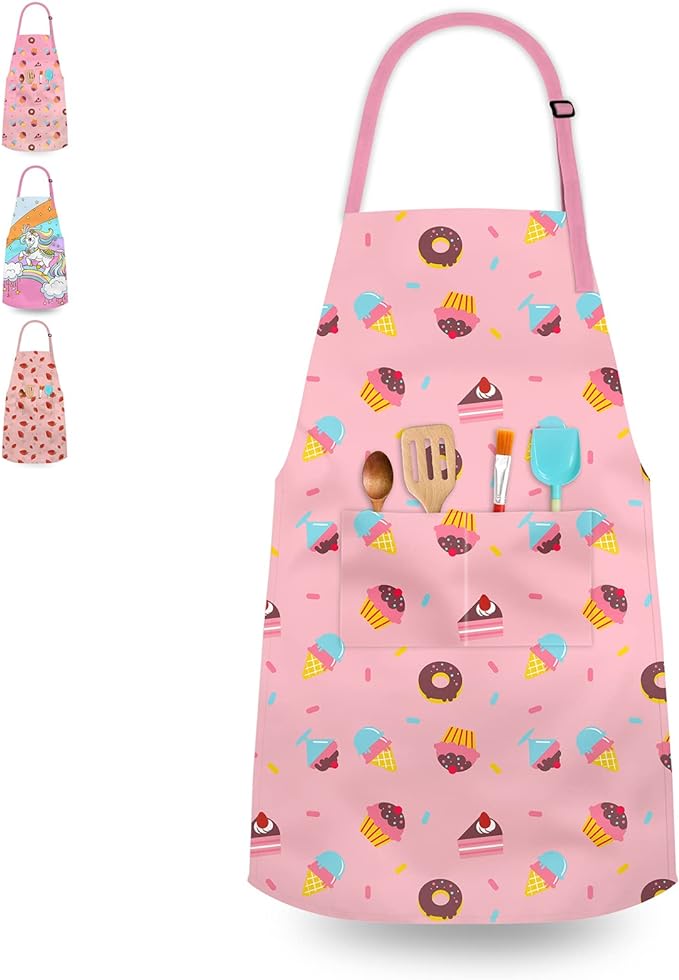
Why This Earns Its Spot: This one sounds too simple to matter. I promise you it does. Give a toddler an apron and watch what happens to their posture. They stand up straighter. They get focused. The apron signals that they are officially in helper mode, and toddlers take roles seriously when they have the uniform to go with them. It’s also genuinely practical. Protecting their clothes during kitchen tasks, cleaning, and art projects means fewer outfit changes and less laundry for you. An adjustable apron that fits from age 2 through early elementary is one of the best cost-per-use investments in this whole system. I swear by ours. It has been through two solid years of pancake Saturdays with the twins.
The ritual matters just as much as the protection. Tying on the apron before kitchen chores creates a transition cue that helps toddlers mentally shift from “I’m playing” to “I’m a helper right now.” That transition is surprisingly hard for toddlers to make without a clear signal. The apron is the signal.
The game-changer for the morning routine: The physical act of putting on the apron creates a ritual that shifts toddlers into helper mode without you having to say a word.
The win: Protecting clothes during messy chores means you’re not adding a wardrobe change to an already full morning timeline.
The relief: An adjustable, washable apron that goes on easily is one less battle in a phase that already has plenty of battles built in.
One thing to know: Some toddlers resist the apron for the first week or two. Try pairing it with genuine excitement (“You’re the official helper! Here’s your apron!”) and they almost always come around within a few days.
They’ve got their chart. They’ve got their tools. They’ve got their uniform. Now let’s give them one task that is completely theirs to own from start to finish.
The Sanity-Saver: Their Own Spray Bottle Station
The Sync Factor: This is the hidden gem of the whole system. Fill a small spray bottle with water and hand your toddler two microfiber cloths. Tell them this is their table-wiping station. Watch what happens. After every single meal, they walk up to the table, spray it a couple of times, and wipe it down with the focused intensity of a professional cleaner. Is the table perfectly clean? Honestly, usually pretty close. The microfiber cloth picks up crumbs and sticky spots efficiently even with the enthusiastic-but-chaotic scrubbing technique of a 3-year-old.
The ownership factor here is everything. When the spray bottle is theirs and the task is theirs, they do it without being asked. That is the goal of this whole system. Not chores they do because you told them to. Chores they do because it is their job. After going down a rabbit hole of reviews and parent forums on this one, I kept seeing the same word over and over: proud. Toddlers who have their own cleaning station are proud of it. They show it to visitors. They wipe things that don’t even need wiping. Let them.
The time-save: Post-meal wipedowns that happen automatically because they own the task cut your cleanup routine without any additional effort from you at all.
The payoff: Microfiber picks up crumbs and stickiness efficiently even with the enthusiastic-but-unpredictable scrubbing of a 3-year-old.
The habit-builder: “After we eat, we wipe the table” becomes a sequence they own and initiate, building a habit loop that runs without your prompting for years.
The honest trade-off: You will go through more spray bottle water than you expect, and occasionally the table will be “cleaned” with a cloth that was already wet from somewhere mysterious. Check the cloth before they start.

Table wiping is handled. Now let’s talk about the one chore that teaches toddlers something genuinely real about how a household runs.
Why It Turns Laundry Into Their Proudest Job
The After-School Win: Laundry is secretly the best first chore for toddlers, and I don’t think enough mamas talk about this. Carrying a small basket of clothes to the laundry room, sorting darks from lights, and handing items to the machine one by one are all tasks a toddler can genuinely do with minimal help. The catch is that the basket has to fit their actual arms. An adult laundry basket is too wide to grip, too heavy to carry, and too frustrating to bother with. A small basket with handles sized for toddler hands puts the whole task within their reach.
After going down a rabbit hole of reviews, the consensus is consistent: when the basket fits them, they carry it. When they carry it, they feel the weight of real contribution. Not pretend helping. Not supervised helping. Actual carrying-clothes-to-the-laundry helping. That is a big deal for a toddler’s sense of self. And sorting colors versus whites adds a genuine learning layer, so this chore is doing double duty as a life skill and a categorization lesson at the same time.
Building the laundry habit now also means you’re not starting from scratch at age 7 when they’re actually capable of running full loads. The sequence is already in their body. You’re just adding more steps as they grow into them.
The win: Their own basket gives them whole-task ownership from carry to sort to load, which builds real confidence and a sense of genuine household contribution.
The time-save: Sorting colors from whites is a toddler-friendly task that also teaches categorization, so this chore doubles as a learning activity without any extra setup from you.
The flow-maker: Building the laundry routine now means the habit is already baked in when they’re ready to take on full loads at age 6 or 7.
Fair warning: Expect sorting errors and at least one dramatic moment when they can’t lift the basket on their own. That’s the learning curve. Redirect, laugh a little, and keep it fun.

You’ve Built a Real System
Remember The “I Do It!” Trap? The toddler who desperately wanted to help but added 30 minutes to every task? Here’s what this system looks like from the other side.
The chore chart tells them what to do without you prompting every step (solve #1). The kid-sized cleaning set fits their hands so sweeping actually works (solve #2). The learning tower gives them safe counter access so kitchen participation is real and not terrifying (solve #3). The apron flips them into official helper mode so they show up with actual focus (solve #4). The spray bottle and cloths mean post-meal table wipedown happens automatically because it’s their station (solve #5). The laundry basket makes laundry a whole task they carry from start to finish (solve #6).
Your toddler isn’t just following you around saying “I do it!” anymore. They have a chart. They have tools that fit them. They have a uniform. And on a good day, you are getting genuine help instead of creating extra cleanup for yourself. That is not a small thing. That is a total mom win.
If you’re building out more structure for your toddler’s day, check out my posts on screen-free toddler activities for independent play ideas that stretch their attention span beautifully, and summer routine for toddlers for help fitting chores into the bigger daily flow.
You’ve got this, mama! And if your toddler decides today is the day they spray half a bottle of water on the dog instead of the table, or sorts all the “darks” into the whites pile with complete and utter confidence, just remember they’re learning. Leave a comment below and tell me which of these tools you’re trying first. I’d love to hear how it goes!
Don’t forget to pin this article!