The Laundry Room Design That Makes a Utility Space Feel Intentional
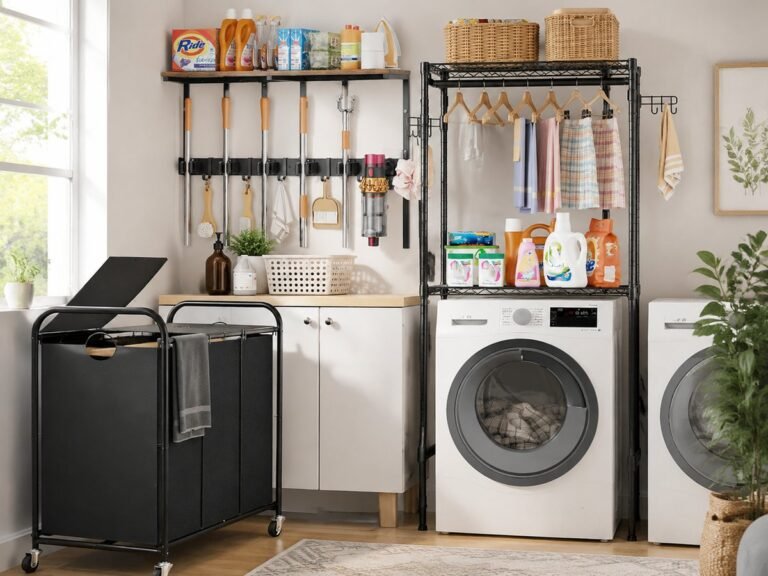
The laundry room is the most-used room in the house and the one nobody ever designed. It got a washer and a dryer and whatever else fit, and then it stopped there. Detergent on the counter next to the dryer sheet box next to the stain stick and the half-empty fabric softener and the lint roller that has been sitting there since February. Iron on the floor because there is nowhere else for it. Laundry on top of the dryer because there is nowhere to sort it before it goes in.
This is not a you problem. This is a room that was set up for function and never thought about past that. And because nobody ever sees it, you stopped expecting it to look like anything. But you see it. Every time you walk in to start a load, every time you switch it over, every time you fold in there because the table is in there and the couch is occupied. You see it multiple times every single day.
The thing is, designing a laundry room is not a renovation. You do not need new cabinets or a tile backsplash or a contractor. You need six products that each solve one visible problem and collectively make the room look like someone thought about it. Here is what we added, in order from most visible to most functional, and why each piece actually matters.
This post contains affiliate links. As an Amazon Associate I earn from qualifying purchases, at no extra cost to you!
Six Products That Make Your Laundry Room Look Designed Instead of Just Functional
Think about the difference between a room that looks designed and a room that looks like it happened. The designed room has storage that is consistent, surfaces that are clear, and a visible logic to where things live. The room that just happened has product packaging everywhere, no consistent storage, and things living wherever they got put down last. These six products move a laundry room from the second category to the first, without touching a wall or replacing a fixture.
The Display Layer: Floating Shelves That Make Storage Look Like a Decision
Why this earns its spot: The fastest way to make a utility room feel designed is to get storage off the counter and onto the wall. Counters that hold products look cluttered no matter how neat they are. Walls that hold products look intentional. A set of floating wood shelves, mounted at the same height in the same finish, does two things at once: it moves the visual clutter up and off the counter, and it signals that someone made a choice about where things go.
The key is a matching set. One shelf at a random height looks like something that got put up to hold one thing. Two or three shelves in the same finish and at consistent heights look like a design decision. We have ours above the washer and dryer, which is wall space that would otherwise just be wall. They hold the detergent, a small basket of dryer sheets, a plant that likes the humidity, and a couple of folded hand towels. The counter is clear. The wall looks curated.
What to look for: shelves wide enough to hold a detergent container (at least 16 inches) and deep enough to feel substantial (at least 8 inches). Floating style with no visible brackets reads cleaner than bracket-mounted shelves. Wood tones or white, whichever matches your washer and dryer situation.
- The win: Wall-mounted storage gets product containers off the counter and gives them a permanent, visible home that looks intentional instead of wherever-it-fit
- The design upgrade: A matching set of two or three in the same finish ties the wall together in a way that a single shelf never does
-
The flexibility: Works in any size laundry room because the shelves go on the wall, not on the floor, so they do not compete with the washer and dryer for ground space
-
One thing to know: Locate a stud before you mount them, and use the right anchors for your wall type. A shelf that falls because it was not mounted properly is the opposite of the calm, designed room you are going for.

Shelves on the wall, counter starting to clear. The next biggest design move costs less than most candles and takes a single afternoon.
The Wall Statement: Peel-and-Stick Wallpaper That Changes the Whole Room in an Afternoon
The room changer: If you have never put peel-and-stick wallpaper on a laundry room accent wall, it is the fastest transformation you can make to a utility space, and it requires no contractor, no commitment, and no skill beyond patience. A removable peel-and-stick wallpaper on one wall, even just the wall behind the washer and dryer, takes a room that looks like a utility closet and makes it look like a room someone cared about.
The removable part matters as much as the pattern. Because it peels off cleanly, you can try it, and if you hate it, you take it down and do something else. That removes the risk that keeps most people from committing to a wallpaper choice. In practice, once it is up, it stays because it looks so much better than the bare wall it replaced. We did the wall behind the washer and dryer in a subtle textured pattern, nothing bold, just enough that the room looks finished instead of forgotten.
Look for a pattern that works at room scale, not just on the phone. Geometric, subtle texture, or a small repeating motif reads well at laundry room distances. Solid colors work too if you want a painted-wall effect without the paint. Measure the wall before you order so you have enough to cover it completely, plus a few extra inches for trimming.
- The payoff: One accent wall of peel-and-stick wallpaper is the single biggest visual change you can make to a laundry room without any tools or permanent installation
- The low risk: Removable adhesive means the pattern does not have to be permanent, which makes it possible to try something you might otherwise not commit to
-
The finish factor: A wallpapered wall behind the washer and dryer makes the whole room read as designed instead of unfinished, which changes how the entire space feels
-
Real talk: Apply to a clean, dry, primed wall for best adhesion. Freshly painted walls can sometimes peel when the wallpaper comes down, so check your wall surface before committing.

The wall is handled. The floor situation, specifically the laundry pile that accumulates before it gets washed, is next.
The Sort System: A Hamper That Makes Dirty Laundry Look Sorted Instead of Just Messy
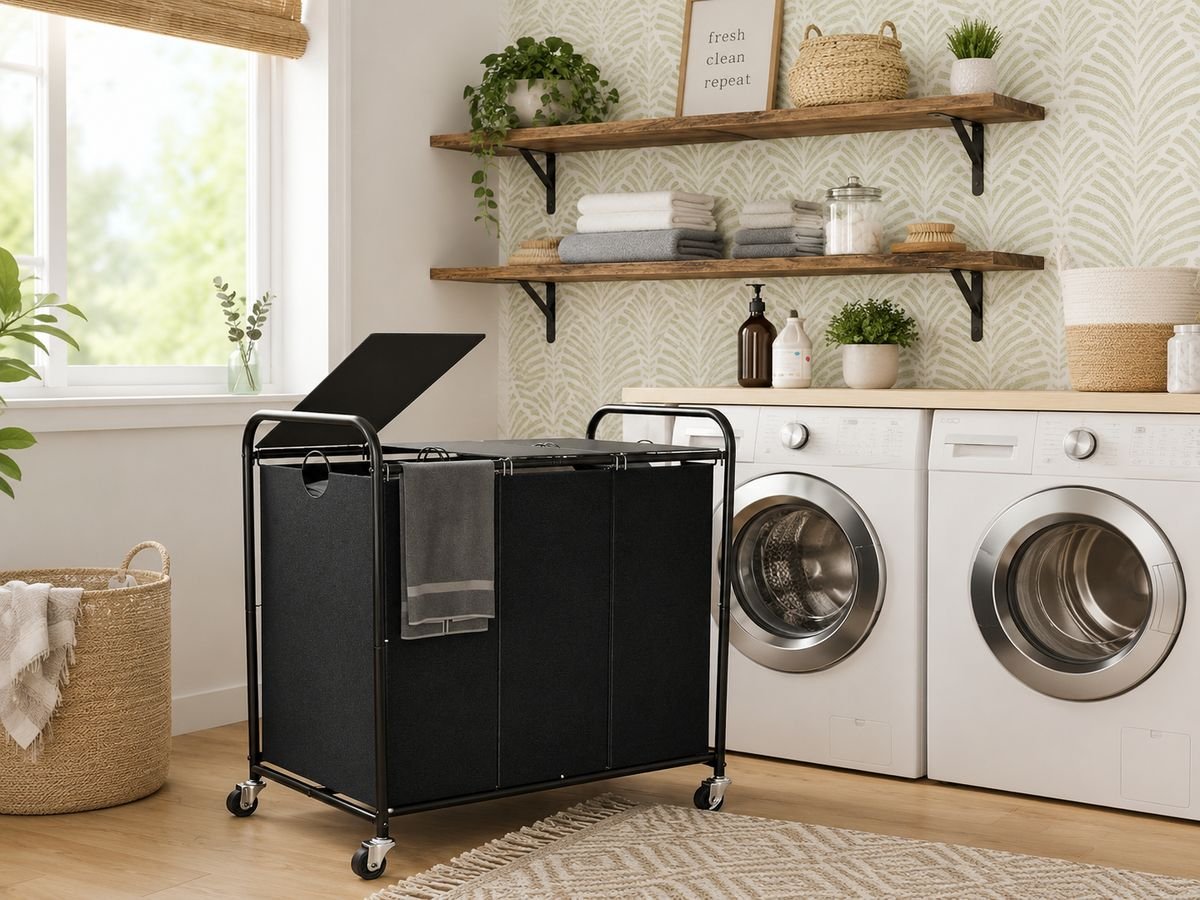
What this fixes: In most family homes, dirty laundry lives in one of two places before it gets washed: a single overflowing hamper in a bedroom or a pile on the laundry room floor. Neither is a system. A three-section laundry sorter on rolling wheels is a system. Darks in one section, lights in another, colors in the third. Clothes go directly to the right section when they come off, which means no pre-wash sorting pile and no pre-wash sort at all.
The rolling wheels are the feature that makes this actually work for laundry day. When one section is full, you do not have to carry an armload of clothes across the room to the machine. You roll the sorter. This sounds minor until the first time you do it and realize how much easier that one thing makes laundry feel. Combined with a canvas or linen bag construction instead of plastic, the sorter also looks like something that belongs in a designed room instead of something that was just added for function.
One section per load type is the sorting logic that saves the most time: darks together, lights together, delicates or colors together. When one bag is full, that is your signal to run that load. No counting, no sorting, no digging through the pile looking for what goes together.
- The win: Three separate sections mean clothes are sorted from the moment they come off, so pre-wash sorting is completely eliminated
- The mobility: Rolling wheels make moving a full section to the machine a push instead of an armload, which is the difference between laundry feeling manageable and laundry feeling like a chore
-
The look: Canvas or linen construction makes the sorter look like a choice instead of a compromise, which matters in a room you are trying to make look designed
-
One thing to know: These work best when everyone in the household actually uses the sections. It takes about a week to build the habit, and after that it runs itself.

Sorting handled. The counter is the next visible surface that defeats even the best laundry room intentions.
The Counter Edit: Dispensers That Replace Product Clutter With Something That Looks Intentional
The small-space win: The laundry room counter, if you have one, accumulates product packaging the way a surface with no designated system always does. Detergent in its original plastic jug next to fabric softener next to the stain stick next to whatever else got set there. It looks like a store shelf, not a designed room. A matching set of refillable glass or ceramic dispensers replaces all of that packaging with something cohesive, labeled, and genuinely nice to look at.
The shift here is simple: decant the detergent, fabric softener, and any other liquids into matching dispensers with consistent labels, set them on the counter or a tray, and suddenly the functional part of the counter looks like a design choice. This takes about fifteen minutes to set up. The visual difference is significant enough that the first time I did it I genuinely stood in the doorway of my laundry room just to look at the counter, which is not something I had ever done before.
A set of three or four dispensers in the same material, the same shape, and with labels that match each other is the setup that works. Mix in a small tray to contain them and they become a vignette instead of just a row of containers. Refilling takes a couple of minutes, and you do it less often than you think because the dispensers hold more than they look like they do.
- The payoff: Matching dispensers turn a counter full of product packaging into something that looks like a design choice instead of an accumulation of whatever was on sale
- The label effect: Consistent labels on a matching set make the counter feel organized and branded to the space, which is a different feeling than even neatly arranged original packaging
-
The time investment: One fifteen-minute setup changes the counter for the life of the dispensers, which is the best return on organizing effort in the laundry room
-
One thing to know: Some detergents are too thick to pour through a standard pump. Check the consistency before you commit to a pump-style dispenser, or choose a pour-spout design for thicker formulas.

Counter edited. The floor situation, specifically the iron and ironing board, is the last item that keeps a laundry room from looking designed.
The Floor Clearer: A Wall-Mount That Gets the Iron Off the Floor for Good
The organization payoff: The iron and ironing board are the items that defeat laundry room design most consistently. They are too large to go in a drawer, too awkward to stand in a corner without tipping, and too hot right after use to put away in a cabinet immediately. So they end up on the floor, or propped against the wall, or set up on the board and never fully put away because putting them away is a whole extra step. A wall-mounted ironing board holder solves all of this with a single bracket system that holds both the board and the iron on the wall, folds flat when not in use, and keeps the floor completely clear.
Mounting the ironing board on the wall does two things for the design of the room. First, the obvious: the floor is clear, which makes the room feel significantly larger and more open. Second, the less obvious: the board and iron on the wall look like they belong there, the same way a mounted pot rack in a kitchen looks intentional instead of inconvenient. Everything in its dedicated spot is design, even in a utility room.
Look for a mount that holds both the board and the iron securely and that has a protective rest for the iron so it does not need to cool completely before it goes up. Some versions fold the board flat against the wall, which means the footprint when not in use is essentially zero.
- The win: Both the iron and the board are off the floor permanently, which opens up the room and removes the two items most likely to make a laundry room look like it is in the middle of being used even when it is not
- The fold-flat: A mount that holds the board flat against the wall when not in use takes up no visual space between ironing sessions, which keeps the room looking clean
-
The safety angle: A proper mount with an iron rest means the iron is always in the same spot, always cooling safely, instead of on a counter or a chair
-
One thing to know: Measure the door clearance before mounting. Some ironing board wall mounts are positioned so the board swings out rather than down, and you want to make sure you have room to extend it without hitting the opposite wall or the washer.

Iron off the floor, counter clear, wall looking finished. The last piece adds the storage depth that every designed laundry room needs to keep the surfaces looking as good as they do on day one.
The Storage Column: A Narrow Cabinet That Adds Real Capacity Without Taking Over the Room
Why this earns its spot: Every laundry room has things that do not have a good home: extra detergent, cleaning supplies, backup paper towels, the things that need to be in the laundry room but do not look good sitting out. A narrow freestanding storage cabinet with doors gives all of those things a closed, out-of-sight home in a footprint that even the smallest laundry room can usually spare. Most narrow laundry room cabinets are 12 to 18 inches wide and floor to ceiling tall, which means a significant amount of hidden storage in a very small floor footprint.
The doors are the key feature. Open shelving stores things, but closed shelving makes a room look designed because the things you store are not visible. A laundry room where all the functional items are behind a door looks designed. A laundry room where the same items are on open shelves just looks organized. Both are improvements, but the cabinet version is the one that reads as intentional design rather than managed chaos.
Color-match the cabinet to your washer and dryer area if possible. White works in most laundry rooms. A wood-grain finish works if the shelves are wood-tone. The goal is a cabinet that looks like it was planned for the space, even if it was bought from a box.
- The win: Closed cabinet doors hide the practical, less-attractive contents of the laundry room and let the surfaces and open areas do the design work
- The vertical storage: Floor-to-ceiling in a 12 to 18-inch width gives you more storage than it looks like, without taking up the floor space that a wider piece would require
-
The finished look: A cabinet with doors reads as designed in a way that open shelving does not, which is the difference between a room that looks organized and a room that looks put together
-
One thing to know: Freestanding cabinets can tip if they are not anchored to the wall. Use the anti-tip strap included with most units, especially in a room where kids might open the doors and pull on the shelves.

Your Laundry Room: The Full Picture
The laundry room nobody designed can look like someone thought about it. Here is what that actually means in practice.
The shelves hold the things that used to be on the counter. The wallpaper on the back wall makes the room look finished instead of forgotten. The sorter means the laundry is always sorted and ready to go, not piled on the floor waiting for you to deal with it. The dispensers on the counter look cohesive and intentional instead of like a row of product packaging. The iron is on the wall, out of the way, in the same spot every time. The cabinet holds everything that would otherwise be sitting out, behind closed doors where it does not affect how the room looks.
You still have to do the laundry. That part does not change. But the room you do it in does not have to feel like it gave up before you got there.
For more ways to organize the laundry space, check out our laundry room organization ideas post, which covers the utility side of the same room. And if you are working with limited square footage, the small laundry room ideas guide has zone-by-zone solutions for making every inch count.
You have got this, mama! Drop a comment below and tell me which part of your laundry room drives you the most crazy. I have absolutely been there.
Don’t forget to pin this article!